


Liriope’s Muse: Tree Care Tips from a Master Arborist
TRUSTED TREE CARE SERVICES SINCE 1970
Liriope's Muse: Prune Your Fruit Trees Now!
The best time of year to prune your fruit trees, for a bountiful production in the spring is now! (or for those who are not reading this blog as it is published – late summer to early fall, as the temperatures begin to cool but still weeks before the first frost)
Disclaimer: this advice is based on our experience in the Greater Houston area’s climate, and supported by the natural hormonal changes within a tree.
It is a common practice for people to leave the years growth on the tree through the winter and then prune back the over growth just after the last frost and before bud break, however this practice can actually stunt how much growth the fruit tree experiences in that season.
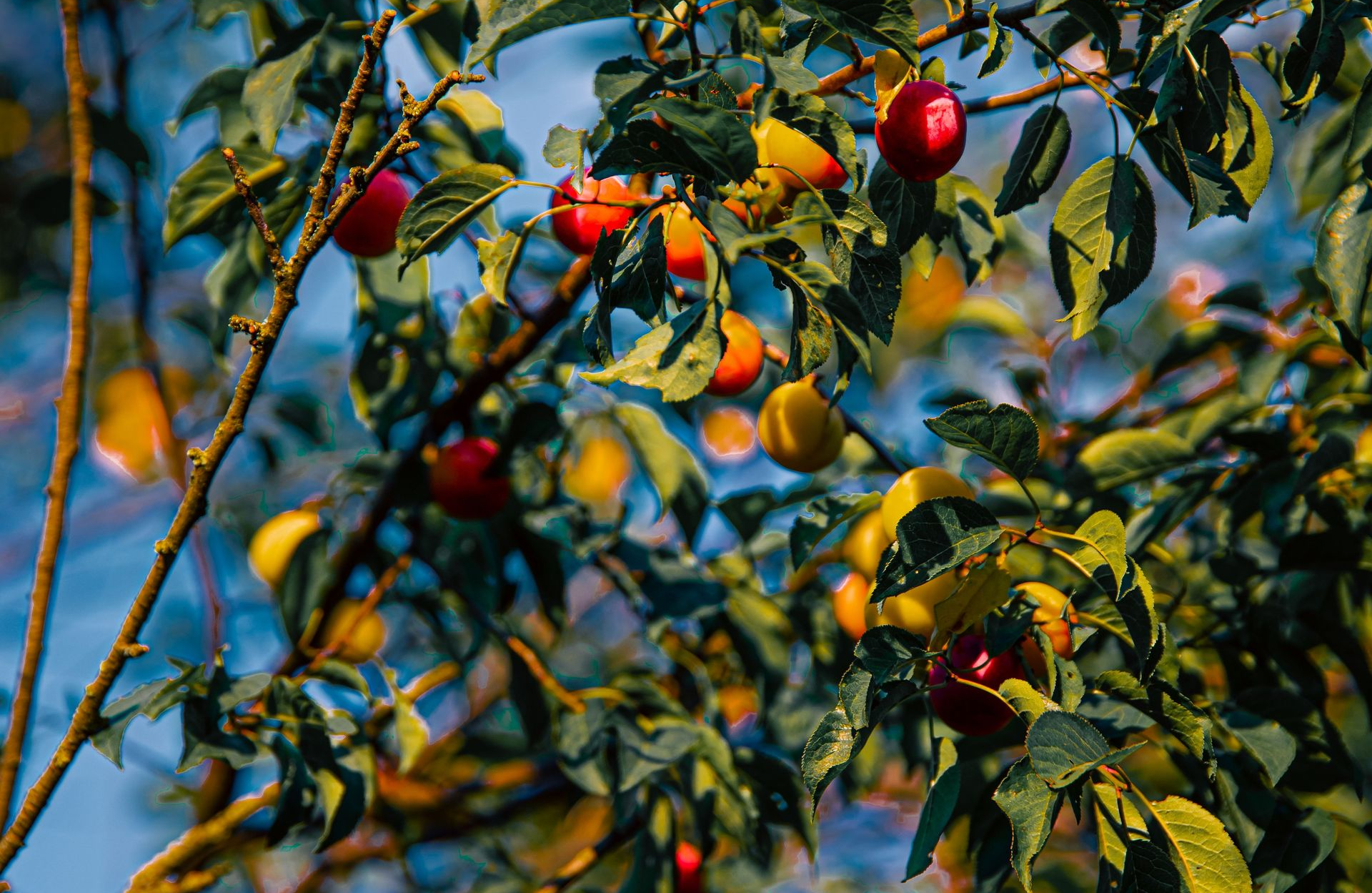
You see, as a tree slowly prepares to emerge from dormancy in the late winter; it is slowly building up Auxins in the tips of every shoot. (Auxins are the plant hormone responsible for growth in both the shoots (branches) and the roots of every plant and tree.) By pruning at the cusp of spring you are removing much of the tree’s hard work and energy it stored through the winter for the new springs flush. And instead of being able to branch out and grow as soon as the conditions are right, it is forced to refocus energy on healing its wounds and protecting itself, before reproducing new auxins.
Just to preface, pruning just before bud break does not negatively impact the health of your tree to any noticeable degree, rather it harms the fruit production and bounty for that year.
So why early fall?
In our experience, we have found this to be the ideal time as it gives the tree plenty of time to callus, or heal over, its wounds before the freezing temperatures arrive. This is important not only so that the tree is strong and ready to withstand the impending freezes, but also so that all of the old wood and extra weight is off come spring so the canopy is ready to support the trees’ new flush!
This avoids not only removing the trees built up auxins and causing it to have to shift its focus to healing, but it also avoids leaving your tree vulnerable to pests and diseases that emerge in the spring just as the buds are breaking.
The exact fruit pruning technique you choose does not matter here. Whether it is a light pruning of the new years growth, shaping, or a full pollarding this advice still applies.
Don’t throw away those clippings!
Instead of throwing away your fruit tree’s clippings after your annual pruning, reuse them! Chop them up and put them in your compost. Don’t have a compost? Chop them up and drop them around the base of the trees you just pruned!
Like with all good things, leaf litter decomposition takes time but at the end of it you’ll have added a free natural organic fertilizer to your soil. I actually practice this myself on my fruit trees, I prune them once annually (or as needed depending on the type) and drop the leaves and branches around the base and eventually they completely break down and are absorbed into the soil providing many beneficial nutrients… for free!
This method works if you have mulch too, it will just take slightly longer to break down.
Liriope’s Muse - Expert Tree Care Tips