


Thoughtful Tree Planting for Long-Term Success
Planting a tree is an investment in the future of your landscape. Long-term success depends on selecting an appropriate tree, placing it where it has sufficient room to mature, and installing it correctly from the beginning.
At Eric Putnam BCMA Inc., tree planting is planned around the tree, the site, and your goals for the property. We consider available rooting space, mature tree size, drainage, sunlight, nearby structures, overhead and underground conflicts, planting depth, and the establishment care the tree will require.
When Professional Tree Planting May Be Appropriate
Professional tree planting may be appropriate when you want to:
- Replace a tree that was removed
- Add shade to a home, outdoor area, or landscape
- Improve the appearance and long-term value of the property
- Select a tree suited to the available space and site conditions
- Avoid common planting-depth and root-ball problems
- Establish trees as part of a larger landscape improvement
- Create a long-term planting plan for the property
Tree Planting Services We Provide
The planting scope depends on the tree, property, access, and your goals for the area. Our services may include:
- Reviewing the proposed planting location
- Evaluating available space, drainage, sunlight, soil conditions, and nearby conflicts
- Providing tree-selection and placement guidance
- Locating and exposing the tree’s trunk flare before installation
- Inspecting and addressing visible root-ball defects when practical
- Preparing a broad planting area appropriate for the site
- Setting the root ball at a height suited to the surrounding grade and drainage conditions
- Stabilizing the root ball when necessary
- Applying mulch correctly around the newly planted tree
- Providing watering and early establishment guidance
How We Approach Tree Planting
1.
Evaluate the Site and Select the Tree
We review the planting location, available growing space, sunlight, drainage, nearby structures, utilities, hardscape, and your goals for the property. These conditions help determine which tree species, mature size, and placement may be appropriate.
2.
Prepare and Install the Tree Correctly
We inspect the root ball, locate the trunk flare, prepare the planting area, and position the tree at an appropriate height. Within much of Greater Houston, drainage conditions may require the root ball to be set slightly above the surrounding grade. The exact installation method is based on the tree and site rather than a single planting formula.
3.
Stabilize and Support Establishment
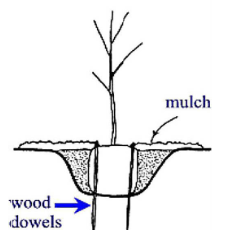
When stabilization is necessary, we use a method appropriate for the tree and planting site. This may include driving stakes through the outer edge of the root ball into firm soil to reduce root-ball movement without tying or restricting the trunk.
Mulch is applied without covering the trunk flare, and we provide guidance for supplemental watering and early care while the tree begins establishing roots in the surrounding soil.
The Technical Guidance Behind Our Planting Method
Our planting method is guided by published arboricultural resources from the International Society of Arboriculture and the University of Florida Institute of Food and Agricultural Sciences. These references inform our approach to planting depth, root-ball preparation, drainage, soil compaction, stabilization, mulching, and early establishment care.
Tree Planting in Compacted or Poorly Drained Soil
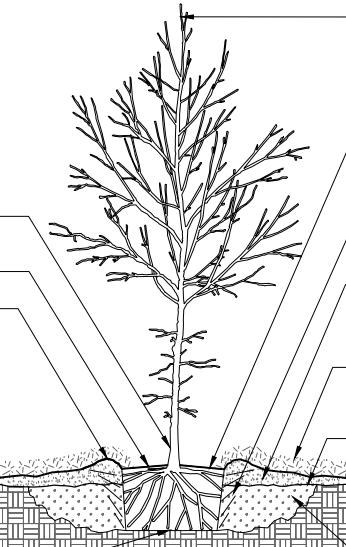
This ISA-hosted planting resource provides guidance for installing trees in compacted or poorly drained soil. It addresses planting height, planting-area preparation, soil beneath the root ball, transitioning to the surrounding grade, backfilling, watering, and proper mulch placement.
Specifications for Planting Trees and Shrubs
This University of Florida publication provides detailed specifications for selecting nursery stock, preparing the planting area, locating uppermost roots, addressing root-ball defects, backfilling, stabilization, mulching, watering, and establishment care.
"The best time to plant a tree was 20 years ago, the second best time is now"


Do You Already Know What Tree Work You Need?
Request a free estimate if you are ready to have one or more trees planted. If you need a detailed planting plan, independent species recommendations, or help deciding where trees should be placed before requesting installation, schedule a paid arborist consultation.
Why Homeowners Choose Eric Putnam BCMA Inc. for Tree Planting
Tree planting is more than placing a root ball in the ground. We plan each installation around the biological needs of the tree and the conditions that will influence its long-term performance.
Arborist-Guided Tree Selection
We consider mature tree size, site conditions, available space, drainage, sunlight, and your goals when helping determine which trees may be appropriate for the property.
Attention to Planting Depth and Roots
We locate the trunk flare, inspect the root ball, and establish an appropriate planting height. This helps avoid deep planting and other preventable installation problems.
Planning Beyond Installation Day
We consider how the tree will establish and mature, then provide practical guidance for watering, mulching, and early care after installation.
What Our Customers Say
When it comes to the care of your trees and yard, we understand how important it is to find a tree expert you can trust. Thanks to our personalized and professional approach with our arborist visits and tree consultations, our customers rest easy knowing their tree’s health will always be our top priority. See what some of our clients had to say:
Service Warranty and Disclaimer
View Our Warranty and Disclaimer
Common Questions About Tree Planting
What is the best tree to plant in the Greater Houston area?
There is no single tree that is appropriate for every property. Tree selection should be based on available space, drainage, sunlight, soil conditions, exposure, maintenance goals, and the tree’s expected mature size. A species that performs well in one location may struggle in another.
How deep should a tree be planted?
The trunk flare should remain visible, and the root ball should not be buried too deeply. The final height depends on the root ball, surrounding grade, soil conditions, and drainage. In poorly drained locations, setting the root ball slightly above the surrounding grade may be appropriate.
Why do you locate the trunk flare before planting?
The trunk flare helps identify the appropriate relationship between the trunk, structural roots, and surrounding soil. Trees are frequently grown or delivered with excess soil covering the flare. Locating it before installation helps prevent the tree from being planted too deeply.
Can you help me select the right tree?
Yes. Tree selection and placement can be included when they are connected to a proposed planting project. If you need a detailed planting plan or independent recommendations before deciding whether to proceed with installation, a paid arborist consultation may be more appropriate.
Can I plant a new tree where another tree was removed?
It may be possible, but the former tree’s roots, stump grindings, disturbed soil, settling, drainage, and reason for removal should be considered. Planting a short distance away from the former stump location may provide better conditions for the new tree.