

Practical Redbanded Thrips Management
Redbanded thrips are small insects that feed on leaf tissue. Their feeding can cause pale spotting, silvery or bronze discoloration, dark surface deposits, and premature leaf drop. Heavy or repeated feeding can reduce the amount of functional foliage and place additional stress on the tree.
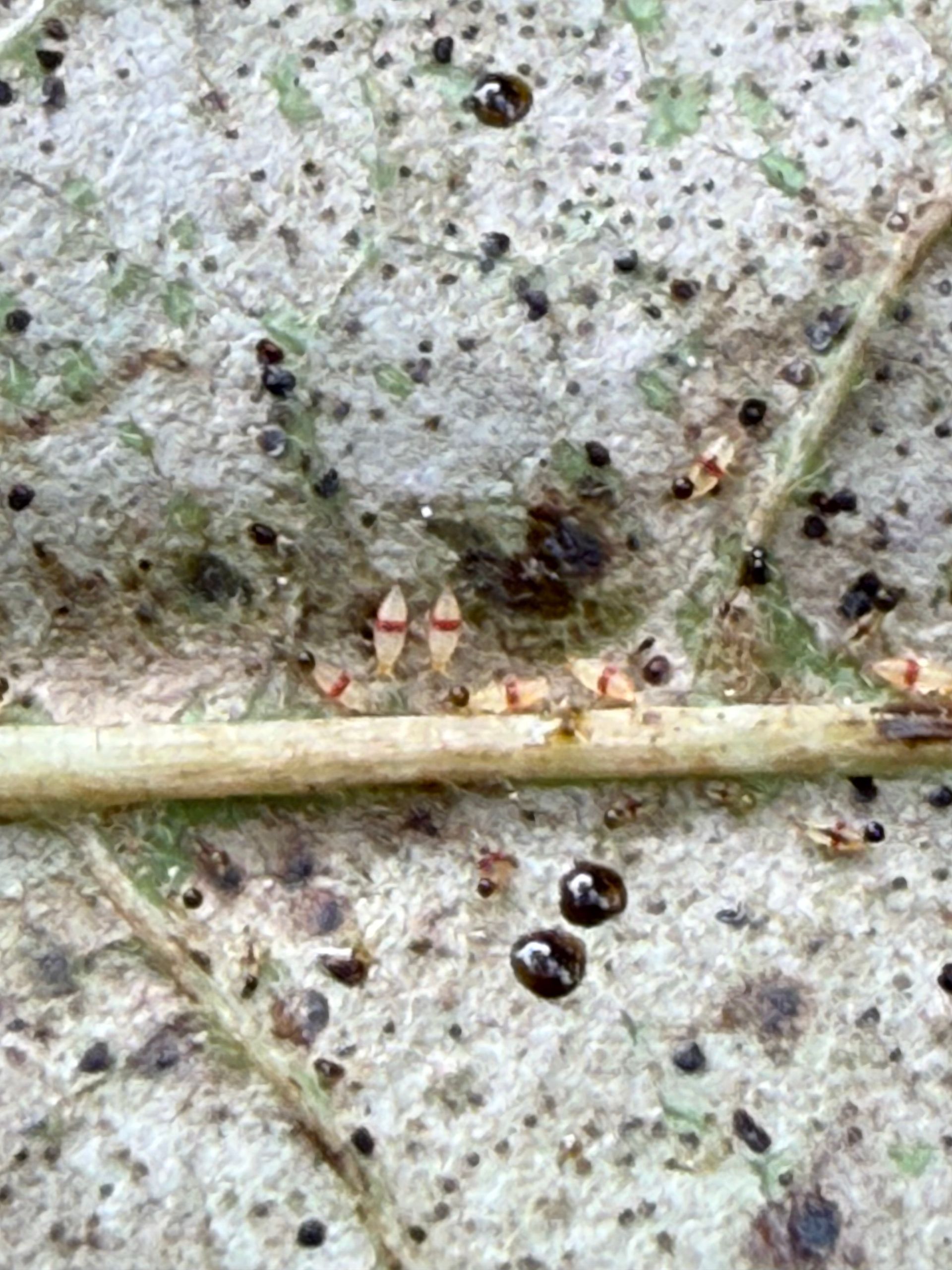
The insects frequently occupy the undersides of leaves, where adults, immature insects, eggs, and feeding damage may be present together. Damage can resemble lace bug activity, other thrips, mites, leaf disease, or environmental injury, so the visible symptoms should be evaluated before treatment is recommended.
Eric Putnam BCMA Inc. bases treatment recommendations on the host tree, insect identification, amount of active feeding, portion of the canopy affected, tree condition, and treatment timing. We also consider whether other growing conditions are contributing to foliage loss or limiting the tree’s ability to recover.
The Team Behind Texas’s First Confirmed Redbanded Thrips Record
Eric Putnam BCMA Inc. discovered and documented the redbanded thrips infestation that led to the first confirmed Texas state record for this species. Our arborists recognized unusual feeding damage on local trees, photographed multiple insect life stages, collected specimens, and coordinated formal identification with Texas A&M specialists and the USDA. The USDA’s National Identification Services confirmed the species and designated the finding as a new state record for Texas.
Our team continues to help lead the documentation and understanding of redbanded thrips in Texas through field observations, identification of affected host trees, and records of infestation locations throughout our service area. This firsthand experience informs our approach to identifying the pest, evaluating feeding damage, planning treatment, and monitoring affected trees.
We share these findings through our educational resources so property owners and tree care professionals can better recognize this pest and understand its potential effects on local trees.
Understanding Redbanded Thrips Treatment
When Redbanded Thrips Treatment May Be Appropriate
Redbanded thrips treatment may be appropriate when:
- Pale spotting or silvery discoloration is developing across the foliage
- Leaves are becoming bronzed, bleached, or papery
- Small dark deposits are visible on affected leaf surfaces
- Living thrips are present on the undersides of damaged leaves
- Premature leaf drop is progressing through the canopy
- A substantial portion of the tree’s foliage has been affected
- A young, recently planted, or stressed tree is losing foliage
- Feeding has continued or returned after a previous infestation
- Multiple susceptible trees across the property are affected
Redbanded Thrips Services We Provide
The service scope depends on the host tree, insect life stage, amount of feeding, canopy condition, and surrounding property. The work may include:
- Identifying redbanded thrips and distinguishing them from other foliage-feeding insects
- Inspecting affected leaves for living insects, eggs, feeding injury, and dark deposits
- Evaluating the amount and distribution of foliage damage
- Determining whether feeding is active or whether the visible damage remains from previous activity
- Assessing the condition and tolerance of the host tree
- Reviewing growing conditions that may be contributing to tree stress
- Defining which trees and treatment areas are included in the service
- Providing expectations for treatment response, canopy recovery, and possible recurrence
How We Approach Redbanded Thrips Treatment
Evaluate the Tree and Feeding Damage
We inspect the host species, foliage, leaf undersides, feeding pattern, canopy density, and amount of premature leaf loss. We also consider drought, irrigation, root stress, recent planting, construction damage, and other conditions that may affect the tree’s ability to tolerate foliage damage.
Identify the Thrips and Life Stages
We examine the insects and associated evidence to distinguish redbanded thrips from other pests. Adults, immature insects, and eggs may be present at the same time. The life stages present, location of the insects, and amount of continued feeding help determine the treatment approach.
Determine the Treatment Scope
We consider the extent of active feeding, portion of the canopy affected, tree condition, beneficial insect activity, and likelihood of additional damage. The written estimate identifies the trees, treatment area, application scope, property protections, and relevant limitations.
Apply the Treatment and Monitor the Tree
Treatment is applied according to the approved scope, identified pest, insect life stage, host tree, weather, and site conditions. Continued monitoring may be recommended to look for living thrips, fresh feeding damage, additional leaf loss, and changes in the condition of new foliage.
Do You Already Know What Plant Health Care You Need?
Request a free estimate if you want redbanded thrips treatment for one or more identified trees. If you need to determine what is causing leaf discoloration, dark spotting, canopy thinning, or premature leaf drop, or whether treatment is necessary, schedule a paid arborist consultation.
Redbanded Thrips Treatment Does Not Reverse Existing Leaf Damage
Treatment is intended to reduce active thrips feeding within the approved treatment area. It cannot repair leaf tissue that has already been damaged or immediately replace lost foliage. Existing discoloration, dark deposits, damaged leaves, and partially defoliated branches may remain visible after treatment.
Canopy recovery depends on the tree species, time of year, amount of foliage affected, previous defoliation, available stored energy, and overall tree condition. Evaluate treatment response by monitoring insect activity, fresh feeding damage, leaf retention, and the condition of new growth.
Complete elimination cannot be guaranteed. Eggs within leaf tissue, insects in protected locations, and overlapping generations can affect treatment response. Continue monitoring or apply additional treatment if you observe fresh feeding or renewed insect activity.
Why Homeowners Choose Eric Putnam BCMA Inc. for Redbanded Thrips Treatment
Redbanded thrips damage can be confused with other insect activity, disease, and environmental stress. We evaluate the insects, host tree, feeding damage, and surrounding growing conditions before determining whether treatment is appropriate.
Accurate Insect Identification
We examine the insects, leaf surfaces, feeding pattern, and associated deposits to distinguish redbanded thrips from lace bugs, mites, other thrips, and unrelated foliage problems.
Treatment Based on Damage and Timing
We consider the amount of active feeding, insect life stages, canopy loss, and treatment timing. This helps determine whether treatment can provide a practical benefit and whether continued monitoring is needed.
Tree Health Considerations
Tree species, canopy condition, previous foliage loss, drought stress, root conditions, and other growing conditions are considered when developing the treatment scope.
What Our Customers Say
When it comes to the care of your trees and yard, we understand how important it is to find a tree expert you can trust. Thanks to our personalized and professional approach with our arborist visits and tree consultations, our customers rest easy knowing their tree’s health will always be our top priority. See what some of our clients had to say:
Learn About Our Pest Treatment Approach
Service Warranty and Disclaimer
View Our Warranty and Disclaimer
Common Questions About Redbanded Thrips
What are the most common signs of redbanded thrips?
Common signs include pale spotting, silvery or bronze discoloration, dark deposits on leaf surfaces, and premature leaf drop. Living insects may be visible on the undersides of affected leaves. Immature redbanded thrips are light-colored with distinctive red markings, while adults are darker.
Will redbanded thrips kill my tree?
Foliage damage does not automatically mean that a tree will die. However, heavy or repeated defoliation can reduce photosynthetic capacity, deplete stored energy, and further stress an already weakened tree. Consider feeding and overall tree condition together.
Why does treatment timing matter?
Treatment is intended to address active insects before additional feeding causes further damage. Eggs within leaf tissue and insects in protected locations may not be affected by every application. The life stages present and the amount of continued activity influence treatment timing and follow-up recommendations.
Will the damaged leaves recover after treatment?
Leaf tissue that has already been destroyed will not return to its original condition. The tree may retain partially damaged leaves or produce new foliage when its species, condition, available energy, and season allow. Existing discoloration alone does not confirm that feeding is continuing.
Is one redbanded thrips treatment enough?
Not always. Insect life stages, overlapping generations, treatment coverage, surrounding pest activity, and tree condition affect the response. Continued monitoring or additional treatment may be appropriate when living thrips and fresh feeding damage remain or return.