

Arborist Services in Stafford, TX
Tree Risk Assessment and Structural Stability Planning in Stafford, Texas
Stafford, TX is a compact, highly developed city where tree management is shaped less by broad rural exposure and more by roads, subdivisions, parks, and built infrastructure. Official city mapping identifies major corridors including South Main Street, Stafford Road, West Airport Boulevard, South Gessner Road, U.S. 59, U.S. 90A, and Beltway 8, all within a relatively small municipal footprint. In practical terms, that means arborist evaluation in Stafford often happens in tight planting spaces where canopy, traffic, homes, and hardscape are already in close contact.
The city’s park system also helps define the local canopy pattern. Official Stafford park mapping identifies Stafford City Park, First Street Park, Rubin Park, Vaccaro Manor Park, Gordon Fountain Lake Park, and Margaret Havens Historical Memorial Garden, along with surrounding residential areas such as Stafford Run, Vaccaro Manor, Stafford Colony, and Braeburn Gardens. Those are useful local anchors because they show how tree conditions in Stafford often relate to neighborhood streets, public recreation, drainage edges, and compact residential lots rather than large open tracts.
Because of that built-out pattern, tree care in Stafford should stay diagnostic and preservation-first. Some trees are planted in constrained strips near drives and sidewalks. Others are mature neighborhood trees now extending beyond the space originally available to them. The right recommendation depends on documented structure, root-zone performance, and target exposure, not on a routine assumption that every mature tree needs aggressive pruning.
Local Tree and Property Conditions in Stafford, TX
Stafford’s local conditions are strongly influenced by urbanization and flat terrain. The City of Stafford’s flooding guidance states that flooding can result from heavy local precipitation even outside mapped floodplains, especially where flat gradients and urbanized surfaces limit infiltration and speed runoff accumulation. For arboriculture, that matters because a tree’s below-grade performance may be affected by repeated saturation, runoff concentration, and soil oxygen limits even when canopy symptoms appear gradual or inconsistent.
The city’s planning materials also show how land use and mobility are organized around connectivity nodes, future land use areas, drainage areas, and a master thoroughfare plan. In practical terms, that means many Stafford trees are growing in managed sites shaped by paving, utility corridors, roadway improvements, and long-term compaction. Compared with lower-density cities, Stafford has less margin for root expansion before trees begin interacting with foundations, curbs, fences, parking areas, or pedestrian routes.
That combination creates two common conditions. First, mature trees in older residential sections may now be carrying canopy weight over homes, driveways, and streets that were not major concerns when the trees were younger. Second, trees in more intensively developed or commercial-adjacent areas may be dealing with restricted rooting volume and harder surfaces that influence long-term stability. Both conditions require documentation and site-specific judgment rather than generic trimming formulas.
Evaluation Philosophy in Stafford
A professional arborist evaluation in Stafford should focus on how the tree functions within a compact, infrastructure-heavy site. In a city where floodwater accumulation, impervious cover, and limited planting areas are common, recommendations should be based on observed structural and site responses rather than on cosmetic appearance alone. A tree that looks dense may still have a structural problem. A tree that looks uneven may still be stable enough for monitoring rather than immediate heavy intervention.
Assessment frequently focuses on:
- Structural attachment integrity in mature neighborhood canopy
- Root-zone performance where paving, runoff, or compaction may affect stability
- Canopy distribution relative to homes, drives, sidewalks, and park uses
- Early identification of defects before they become high-target failures
These priorities fit Stafford because the city’s physical layout leaves limited room for error once a structural issue begins progressing near homes, traffic corridors, or public-use areas.
Priority Services in Stafford, TX
Tree Risk Assessment:
Risk assessment in Stafford often addresses mature limbs over rooflines, driveways, neighborhood streets, and park-adjacent spaces. In some cases, the concern is a documented weak attachment or overextended lateral limb. In others it is whether root-zone stress from runoff, compaction, or restricted soil volume is reducing structural reliability. The purpose of the assessment is to determine whether the condition should be monitored, mitigated, or removed only when improvement is no longer reasonable.
Plant Health Care and Root-Zone Management:
Plant Health Care in Stafford is often most useful when decline appears connected to site limitations rather than a simple canopy issue. Flat gradients, impervious cover, and runoff concentration can all affect the root environment over time. Where intervention is warranted, the goal should be improved resilience and functional stability, not forced top growth.
Structural Pruning:
Structural pruning should remain objective-based. In Stafford, that may mean reducing a specific overextended limb, correcting imbalance, or addressing a documented attachment issue near a home, roadway, or park use area. Broad canopy thinning is not a default solution. Pruning should be used to manage load and improve structure while preserving useful canopy where feasible.
Removal Planning and Tree Disposition Guidance:
Removal should be recommended only when structural reliability cannot be reasonably improved or when target exposure makes retention unacceptable. In Stafford, planning also has to account for tight access, nearby structures, streets, fencing, and hardscape. On compact sites, removal logistics and property protection are part of the arboricultural decision, not an afterthought.
Environmental Considerations in Stafford
Stafford’s flood guidance makes clear that local flooding is not limited to classic channel or mapped floodplain conditions. Heavy precipitation, flat gradients, and increasing impervious area can all create localized flooding and soil erosion or scour around fixed objects. For long-term tree performance, that means root support in Stafford should be evaluated in light of drainage behavior and repeated runoff patterns, not just what the canopy looks like in dry weather.
The city’s thoroughfare and land-use planning also reinforce that Stafford is a compact urban environment with limited open space between canopy and infrastructure. As trees mature within that framework, periodic professional review becomes more valuable because structural issues can move quickly from manageable to high-target. Preservation-first management remains the priority whenever mitigation is feasible.
Recent Work in Stafford, TX
Case Study #2679: Wood-Boring Insect Treatment - The Meadows, Stafford
Property Context:
At a residence in the Meadows area of Stafford, water oak trees in the backyard were identified as needing targeted management due to suspected pressure from wood-boring insects. The treatment scope included the water oak trees and the surrounding soils and grasses to support effective root-zone coverage.
Evaluation Findings:
Assessment documented indicators consistent with wood-boring insect activity affecting the backyard water oak trees. Findings supported active borer pressure contributing to reduced vigor and increased decline risk if left unmanaged, indicating the need for timely suppression and recovery support.
Intervention:
A targeted wood-boring insect treatment was performed for the backyard water oak trees, including the surrounding soils and grasses in accordance with arborist instructions. Management focused on suppressing borer activity, protecting functional vascular tissue, and supporting recovery through condition-based plant health care applied with attention to root-zone coverage.
Outcome (Observable):
Following treatment, canopy condition stabilized, and overall tree performance improved. Subsequent monitoring documented reduced indicators consistent with ongoing borer activity and improved vigor consistent with successful suppression and recovery support.
Case Study #2927: Armyworm, Bagworm, and Caterpillar Treatment - Stafford Run, Stafford
Property Context:
At a residence in the Stafford Run area of Stafford, trees in the backyard were identified as needing pest management due to active or suspected defoliating insect pressure. The recommended scope includes the backyard tree group and the surrounding soils and grasses to support effective treatment coverage.
Evaluation Findings:
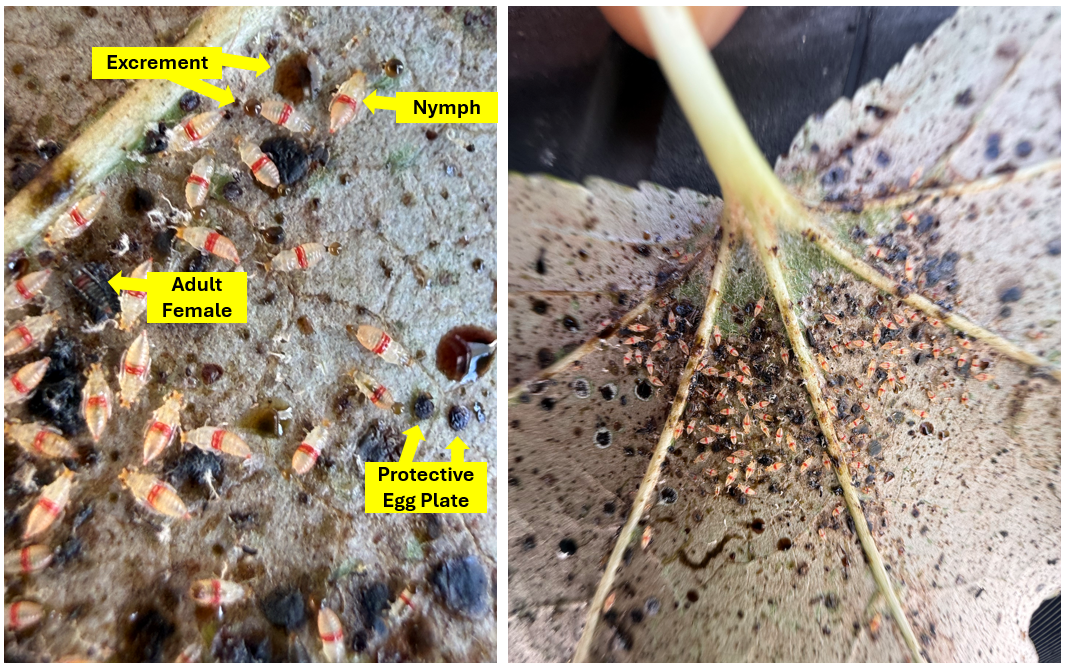
Assessment documented indicators consistent with defoliation pressure associated with armyworms, bagworms, and/or caterpillar activity impacting the backyard trees. Findings supported an elevated risk for continued foliage loss and canopy stress if pest pressure was not suppressed in a timely manner.
Intervention:
An armyworm, bagworm, and caterpillar treatment was recommended for the backyard tree, including the surrounding soils and grasses in accordance with arborist instructions. The recommended approach focuses on suppressing active feeding pressure and reducing ongoing canopy stress through condition-based plant health care applied across the treatment area.
Outcome (Observable):
Following treatment, armyworm, bagworm, and caterpillar pressure was brought under control and defoliation stopped progressing. Subsequent monitoring documented improved foliage condition and renewed growth response consistent with successful suppression and recovery support.
Communities We Serve in Stafford
Eric Putnam BCMA Inc. provides arborist-led tree care, Plant Health Care, and professional tree evaluations throughout Stafford. Our Stafford service area includes properties in communities such as:
- Colony Lake Estates
- Dove Country
- Grove West
- Kingsway
- Meadowaglen
- Park Hill Villas
- Southmeadow
- Stafford Oaks
- Stafford Run
- The Promenade at Stafford Run
* If your neighborhood is not listed, contact our office to confirm service availability for your property *
Nearby Cities We Serve
Eric Putnam BCMA Inc. also provides professional tree care and arborist services in communities near Stafford. Select a city below to learn more about our services in that area.

Request an Arborist Evaluation in Stafford, TX
If you have questions regarding canopy stability, structural defects, or long-term tree health in Stafford, request an evaluation with a certified arborist. Recommendations are based on documented findings and site-specific conditions.
Book an Appointment
Get a quote
Contact Us
Liriope’s Muse - Expert Tree Care Tips