

Liriope’s Muse: Tree Care Tips from a Master Arborist
TRUSTED TREE CARE SERVICES SINCE 1970
Liriope's Muse - Bark Lice: Friend or Foe?
This clean-up crew gets a bad rap due to their unfortunate name… however, unlike the lice that plague us humans, bark lice are not parasitic in nature at all. In fact, they form a symbiotic relationship, called a cleaning symbiosis, with the trees they choose to inhabit. They feed exclusively on the algae, fungi, lichen, spores, pollen, and other organic debris found on the tree’s bark surface. As a result, the tree's bark is cleaned, and they get a smorgasbord. Think of them like the wrasses (cleaner fish) to sharks, who eat the algae off the surface of the sharks. Sharks are cleaned, and they get a meal.
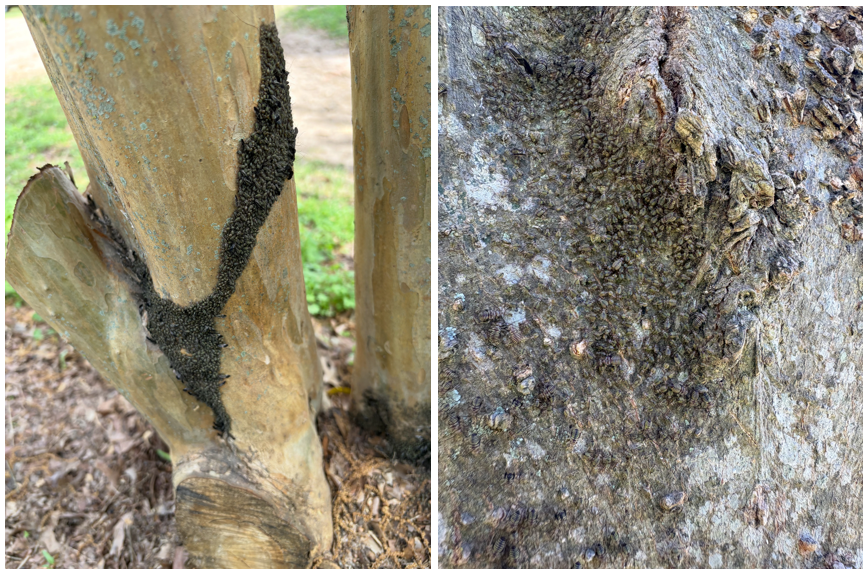
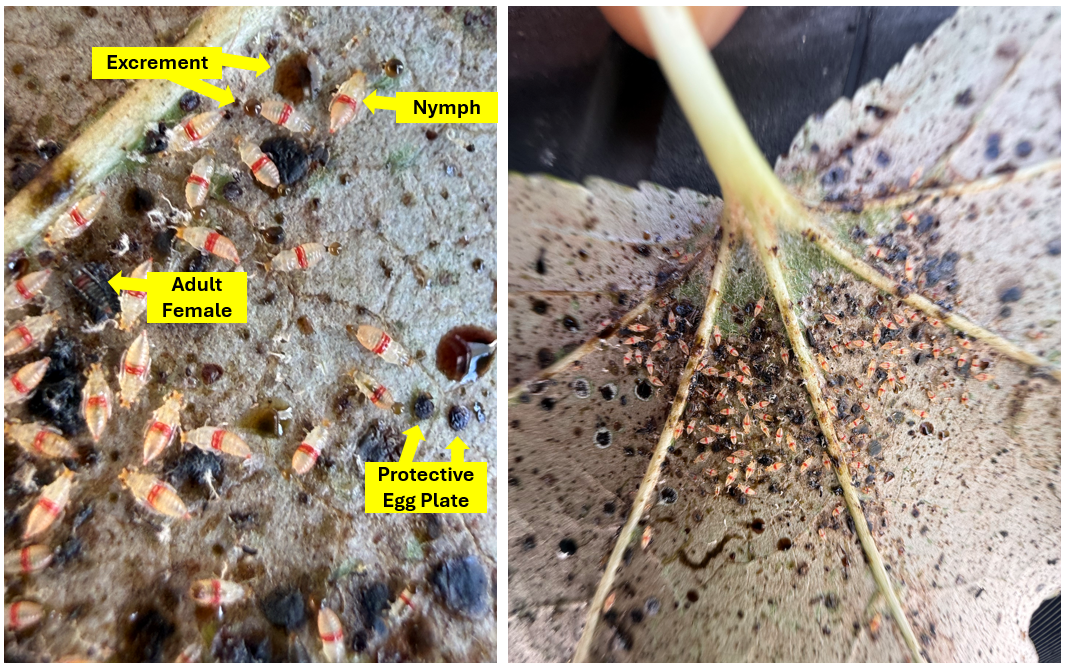
*The photos above were taken by one of our field arborists, they show what bark lice colonies look like on two different kinds of bark*
The Entomology
Bark lice are small, soft-bodied insects with long antennae, slightly resemblant of aphids. They are members of the order Psocoptera, and there are over 300 species in 26 families found in the U.S. and Canada alone, but the ones we will be covering in this blog are the Archipsocus nomas species.
Archipsocus nomas are found across the southern United States from Texas to Florida and are the species responsible for the characteristic silken webs found on the bark of tree trunks and limbs. This silken web poses no threat to your tree; it never extends to the foliage and is actually very fragile and thin. Usually disappearing on its own in a few weeks.
Bark lice have a simple 3-stage metamorphosis: egg, nymph, and adult.
The eggs are oblong-shaped, wider at one end than the other, and light grey or white in color. The first instar nymphs are recognized by their head being wider than their body(thorax) and light color. In this stage, they look like miniature, lighter, wingless adults. It is unknown just how many instars that the Archipsocus nomas species goes through, however in a similar species (Archipsocus floridanus) females go through 6 instars and males go through 5 in the nymph stage. What we do know is that they remain wingless until the third instar, in which females begin to show their wing plates, and with each instar they darken and more closely resemble the adults. The adults are blackish-brown with pale yellow to white stripes on their abdomens and are about 3 millimeters in length. Not all adults possess wings, but if they do, the wings are held roof-like over the insect's body and are membranous. Winged males have short wings, and females can either possess long or short wings. And like with most insects we’ve covered, there is naturally more females than males. In the case of this species, there are about 5 times more females than males.
Eggs are typically laid in the early spring months after the last frost, and they are either laid singly or in small groups. Ironically, these clean-up crews then cover their eggs in debris and feces for protection until they hatch. The eggs hatch from March to June, depending on when they were laid. By July to October, colonies have rapidly increased in both number and size. By early December, populations begin to greatly decline due to frost, and the webs begin to disintegrate through weathering. Small colonies are known to overwinter in the crevices of large trees, like the live oak, where they will be best sheltered from the winter frosts.
We see these natural cleanup crews every year, but their numbers have been noticeably higher in this 2026 season. Which does not come as a surprise, as there is a known correlation between their population numbers and long periods of high humidity and rainfall, which makes sense, as this season we’ve been experiencing El Niña weather conditions that have brought lots of moisture to the Greater Houston area and the surrounding Gulf coastal region.
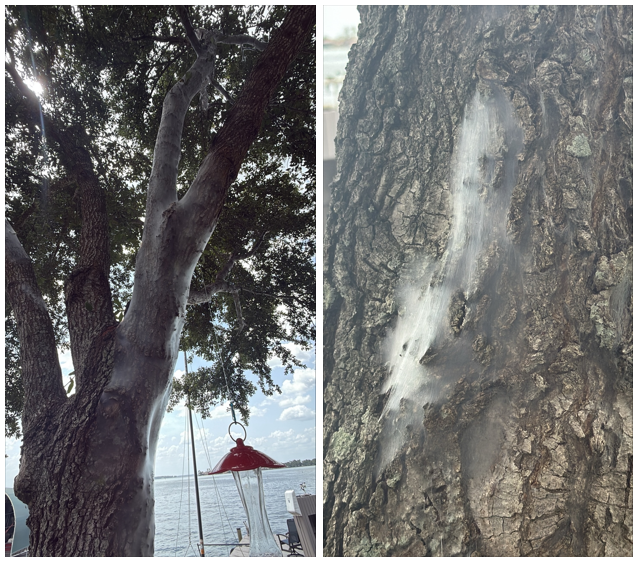
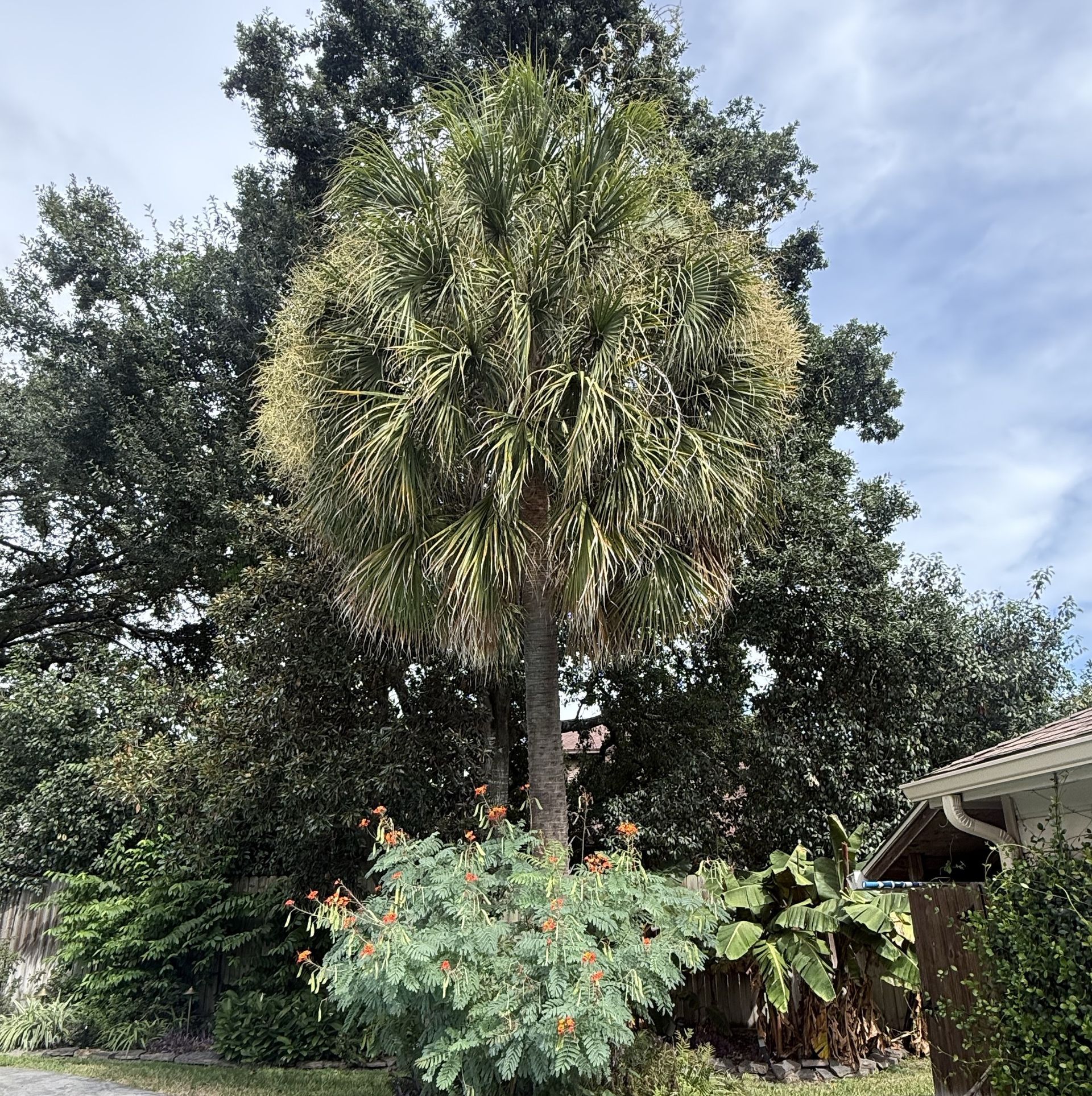
*The photos above were captured by one of our arborists in the field, they show the characteristic and delicate silken webs brought by A. nomas .*
Control
We don’t recommend any control measures to be taken against bark lice, as they pose no threat to your tree; rather, they clean your tree’s bark of lichen and debris. The silken webs they bring along only pose a cosmetic issue and are only temporary. However, in the case of heavy infestations, if the customer is concerned about them after being informed of their benefits, we will take on the case and treat their tree.
Resources:
https://ask.ifas.ufl.edu/publication/IN553
https://tfsweb.tamu.edu/trees/tree-health/insects/bark-lice/
Liriope’s Muse - Expert Tree Care Tips