



Liriope’s Muse: Tree Care Tips from a Master Arborist
TRUSTED TREE CARE SERVICES SINCE 1970
Liriope's Muse: Before You Buy a Moon Cactus, Read This

*The photo above is from Altman Plants*
Recognize this cactus? The one that adorns the garden section of just about every big box store across the United States in the spring and summer months? Growing up I was very fond of these cacti, I remember each year I would implore my parents to buy me one. They’d usually cost no more than $3, so it was no hard feat. I’d take them home, give them the proper cactus care, but somehow no matter what I tried, they’d soon die…
So, a decade later, I finally come to you with the answer to the question nearly everyone who has owned one of these cacti has eventually asked: Why can’t I seem to keep this cactus alive? The short answer… It was not made to survive. It was doomed from the moment it left the nursery, and the plant supplier knew it!*
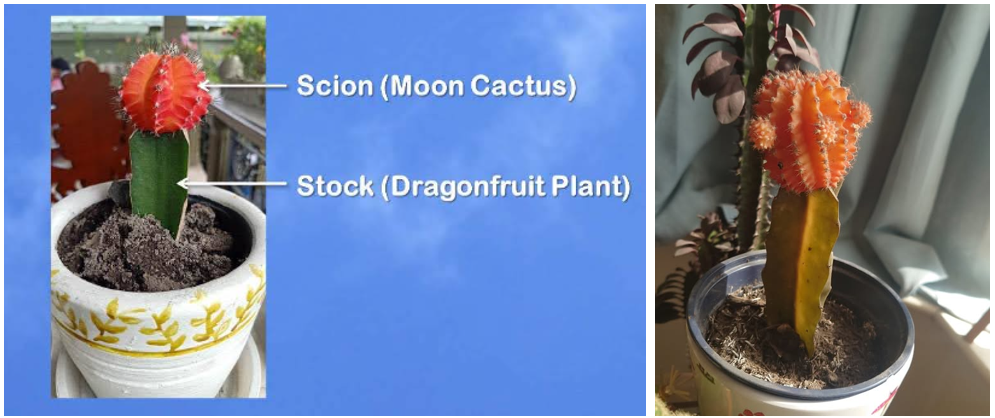
*The diagram to the left is by Practical Gardening, showing the two separate plants, and the photo on the right shows what a drained and dead moon cactus duo looks like.*
What makes this cactus doomed?
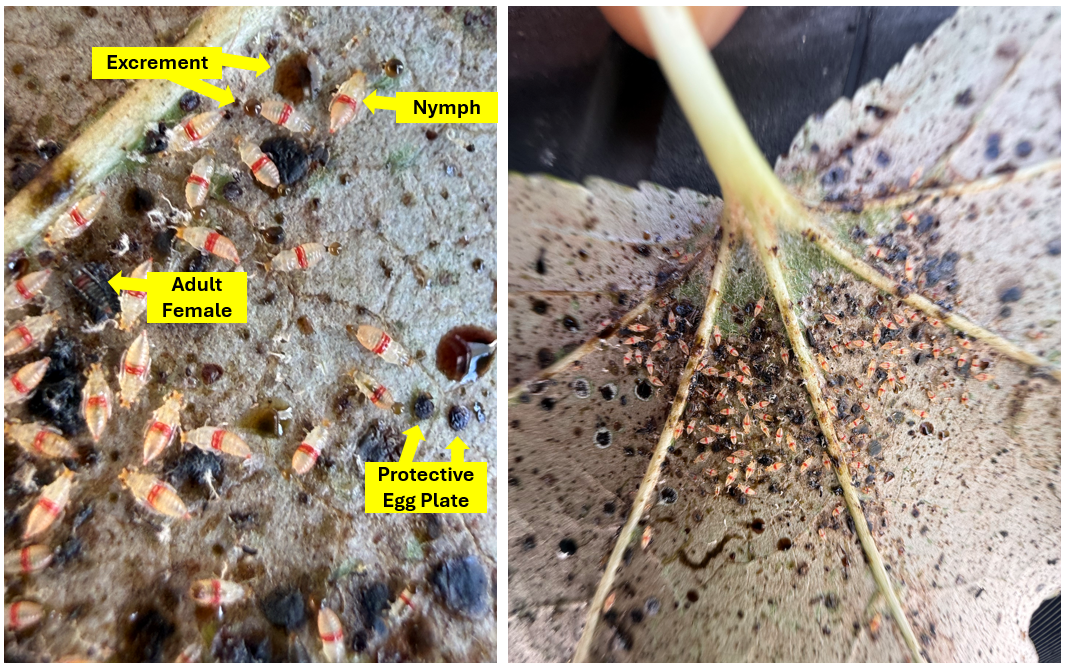
Well, to clarify if it happened to have a label from the store it would’ve been labeled a flowering cactus but even that is a misrepresentation. This cactus is, in fact, made up of two different plants: The characteristic parasitic scion, being the moon cactus, and the host plant(stock), a dragon fruit plant… yes, you read that right; we are sold a parasite, not naturally occurring in nature and incapable of photosynthesizing on its own, that is given a limited food source. The host dragon fruit is drained of its limited nutrient supply and is incapable of keeping up with the moon cactus’s parasitic demands, eventually killing both plants in a matter of months, and some before they even leave the shelf.

*The photo above shows the natural bright pigments of the chin cactus (Gymnocalycium mihanovichii) showing through the chlorophyll (natural green pigments)*
What is a moon cactus?
In short, it is a man-made mutant. The parent plant is the chin cactus (Gymnocalycium mihanovichii), which is native to the rocky areas of Northeast Argentina and Paraguay. It is a slow-growing dwarf cactus, globular in shape, and dark green in color. Growing only 2-3 inches tall, and equally as wide.
In the 1940s, the Japanese cactophile, Eiji Watanbe genetically modified these cacti to remove their naturally occurring chlorophyll to highlight their underlying colors. (The characteristic neon reds, oranges, yellows, pinks, and purples we are used to.) In doing so, he eliminated the plant's ability to photosynthesize, or survive, on its own. Thus, the need for a host plant. The most common commercial host, and one you will find on the shelf is the Hylocereus undatus, or the White-fleshed pitahaya (Dragon Fruit) , but it is also known to be successfully graftable to many other sturdy plants within the cactus family. I am not sure why Eiji chose this as the host plant; I was unable to find the answer. But what I do know is that this doomed duo was introduced in 1948, and hit the market in the 1960s. Initially they weren’t a hit (no surprise), but by the 1980s, they became ubiquitous in garden stores and homes.
Not to be a tinhat-wearer, but I just want to be clear: when buying this duo, you are buying an unlabeled or mislabeled (at big box stores*) plant that the grower KNOWS for a fact is going to die, but they do not warn you of this before purchasing it. Instead, they wait for you to take it home and bank on it inevitably failing and you coming back for another before the season is up, under the impression that it may have just been a bad plant. The truth is, no matter how well you take care of these plants, they will 100% fail unless it happens to produce a pup that you can harvest and propagate before its demise. So it begs the queston: Why do they sell the plants without a disclaimer? Is it to keep people coming back and buying more?* Do they bank on us being uneducated?*
Cultivation
Parasitic nature and corporate greed* aside, there is a whole community for these cacti. Their pups can absolutely be collected and propagated with relative ease. (If you want to know more about their propagation and care, I highly recommend this blog by Practical Gardening) And they are beautiful, but at the end of the day, they are parasites; they will always kill their host, and you will have to continually move their pups to a new living and healthy host to keep them alive.
Here I go again with the tin hat, but this would be the equivalent of removing a mistletoe plant from a tree that was killed by its infestation, and propagating it onto another perfectly healthy tree so it can drain the life from that tree as well.
Now obviously I have a deeper care for trees and plants than most, and in my heart could not partake in this practice. However, if you have the heart, go for it and don't let me stop you! It is a very interesting process, but you must know it’ll need constant grafting to stay alive.
- Sidebar: another interesting thing that you could do instead of buying the plant to continue this vicious cycle is to remove and discard the parasitic cactus and grow and cultivate the dragon fruit plant. In a matter of a few years you could have a nice fruiting dragon fruit for $3 or less, but if you were to buy a specific cutting of dragon fruit you could be looking at spending $30-40!
*All of these comments are alleged and are not pointing to any one specific nursery, cultivator, or store.
A great resource during my research: https://plants.ces.ncsu.edu/plants/gymnocalycium-mihanovichii/
Liriope’s Muse - Expert Tree Care Tips