

Arborist Services in South Houston, TX
Tree Risk Assessment and Structural Stability Planning in South Houston, Texas
South Houston, TX includes a compact city in southeast Harris County near Spencer Highway, SH3, College Avenue, and Sims Bayou drainage influence. Tree care in this area requires more than a visual opinion from the ground. It requires an understanding of how local development patterns, soil behavior, water movement, and canopy exposure influence long-term tree performance.
Properties around Spencer Highway, SH 3, College Avenue, South Shaver Street, Allen Genoa Road, and nearby I-45 access often contain trees growing close to homes, drives, fences, utilities, waterfront structures, road frontage, or public access areas. Nearby features such as the South Houston City Hall area, South Houston High School, Sims Bayou watershed connections, and older residential grids add local context that affects how root systems, canopy architecture, and target exposure should be evaluated.
We provide arborist-led services in South Houston focused on documented structural assessment, preservation-first planning, and long-term tree health stability. Recommendations are based on observed conditions and site-specific objectives, not routine trimming expectations.
Local Tree and Property Conditions in South Houston, TX
Local tree conditions in South Houston are shaped by older neighborhoods, small lots, commercial corridors, utility conflicts, driveways, sidewalks, and high target exposure. This creates a wide range of tree management situations, from mature canopies already interacting with structures to younger trees still adapting to modified soil and drainage conditions.
Soil conditions commonly involve urban clay soils, compacted residential lots, limited planting strips, and altered drainage patterns. These conditions may affect root oxygen availability, anchorage, moisture retention, and a tree's ability to respond to heat or storm stress. Where site grading, utility work, paving, or drainage changes have occurred, the root zone may be affected long before canopy symptoms become obvious.
The local canopy may include live oak, water oak, elm, ash, Chinese tallow, pecan, andurban-tolerant ornamental species. Each species responds differently to pruning, soil limitations, wind exposure, and saturation. Evaluation should account for species characteristics, age class, prior pruning history, and the treeis position relative to houses, driveways, streets, buildings, fences, and pedestrian areas.
Evaluation Philosophy in South Houston
A professional arborist evaluation in South Houston should identify what is limiting performance or increasing risk. A tree may look healthy but still have a weak attachment, root-zone limitation, or load-distribution concern. Another tree may look uneven but remain stable when the structure and site conditions are understood. The evaluation process documents the tree, the site, and the targets before recommending pruning, monitoring, Plant Health Care, or removal.
- Structural attachment integrity and visible defect progression
- Root-zone performance under local soil and drainage conditions
- Canopy load, limb extension, and balance relative to nearby targets
- Site history, target exposure, and whether mitigation is reasonable
Priority Services in South Houston, TX
Tree Risk Assessment:
Tree risk assessment in South Houston focuses on the relationship between visible defects, site conditions, and the targets that would be affected if a limb or whole tree failed. We evaluate attachment strength, decay indicators, canopy distribution, root plate response, and the influence of urban heat, heavy rainfall, Sims Bayou watershed drainage, compacted soils, and storm wind exposure. The purpose is to determine whether a condition can be monitored, mitigated with specific pruning, supported through root-zone improvement, or, in limited cases, addressed through removal planning.
Plant Health Care and Root-Zone Management:
Plant HealthCare in South Houston begins below grade. Trees growing in urban clay soils,compacted residential lots, limited planting strips, and altered drainage patterns may respond poorly when oxygen, drainage, rooting volume, or soil structure are limited. Where decline symptoms are present, evaluation may include root collar inspection, soil compaction review, mulch depth correction, irrigation influence, and site history. Recommend treatments only when they support function and resilience. The objective is not to force rapid growth. The objective is to improve the conditions that allow live oak, water oak, elm, ash, Chinese tallow, pecan, and urban-tolerant ornamental species to maintain stable root systems and sustainable canopy performance.
Structural Pruning:
Structural pruning is objective-based and defect-focused. In South Houston, pruning may be appropriate where overextended limbs, weak attachments, storm-damaged branches,or imbalance create documented concerns near older neighborhoods, small lots,commercial corridors, utility conflicts, driveways, sidewalks, and high target exposure. Target work to the defect being managed, selecting cuts to reduce load while preserving as much functional canopy as practical. Broad thinning is not promoted as a default storm-prevention practice because excessive interior removal can increase stress, sun exposure, and long-term instability.
Removal Planning and Tree Disposition Guidance:
Removal is recommended only when structural reliability cannot be reasonably improved or when observed defect progression creates unacceptable exposure to nearby targets. Planning in South Houston must account for access, surrounding structures, ground conditions, utilities, and protection of adjacent landscape features. Where community rules, municipal requirements, or right-of-way issues apply, clarify documentation before work proceeds. Tree disposition decisions are handled carefully so removal is used as a risk-management tool, not as a substitute for evaluation.
Environmental Considerations in South Houston
South Houston is affected by urban constraints such as pavement, utilities, small lots, reflected heat, and altered drainage. Trees may have limited rooting volume even when the canopy appears full, which makes root-zone evaluation an important part of structural planning.
Heavy rainfall and storm winds can expose weaknesses in attachments or root support, especially where prior pruning or construction has changed canopy balance. Recommendations should remain objective-based and documented, with pruning orremoval used only when conditions support that decision.
Recent Work in South Houston, TX
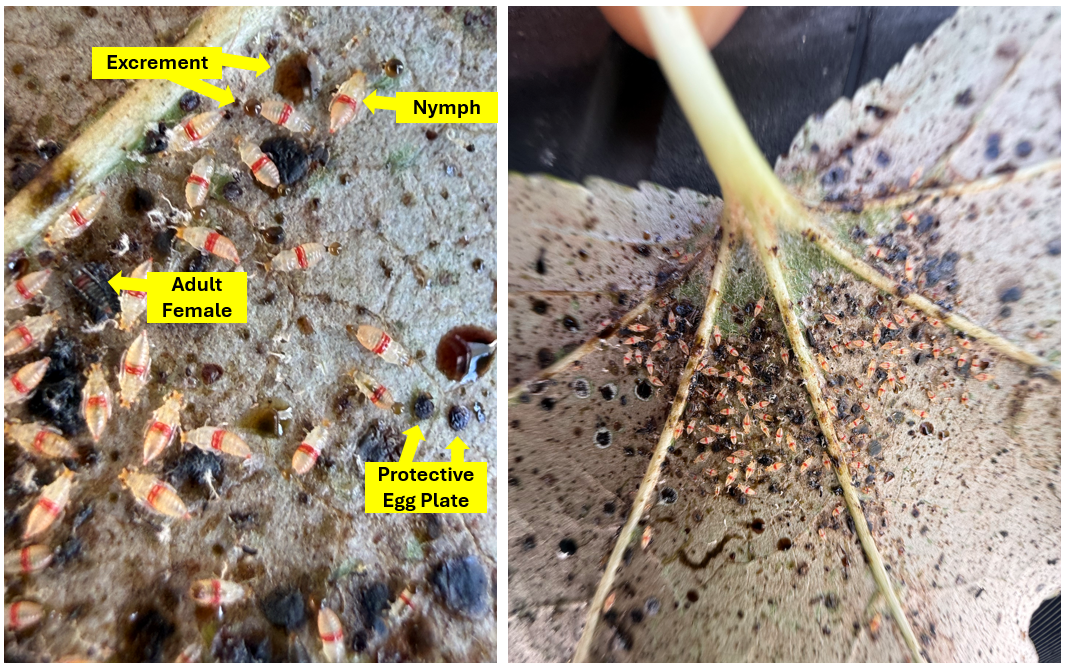
Case Study #9065: Scale, Whitefly, and Mealybug Treatment - Merilyn Place, South Houston
Property Context:
At a residence in the Merilyn Place area of South Houston, four tall Chinese tallow trees in the left side yard required pest management due to sap-feeding insect pressure. The treatment scope included the four tallow trees and the surrounding soils and grasses to support effective coverage and root-zone integration. A 12 month guarantee for the insecticide component was included per arborist instructions.
Evaluation Findings:
Assessment documented indicators consistent with scale, whiteflies, and/or mealybugs affecting the tallow trees. Findings supported active sap-feeding pressure contributing to reduced vigor and canopy stress, with increased risk for continued decline if pest activity was not suppressed.
Intervention:
A scale, whitefly, and mealybug treatment was performed for the four tallow trees on the left side yard, including the surrounding soils and grasses. Systemic insecticide imidacloprid and contact insecticide permethrin were applied to all above-ground and below-ground plant parts to suppress the insects damaging the trees. A surfactant was added to improve uptake by opening stomata in the cell walls, allowing insecticides to be fully integrated throughout the treated trees. This program was paired with a biostimulant treatment that includes complete fertilization of the trees.
Outcome (Observable):
Following treatment, pest pressure was brought under control, and overall tree performance stabilized. Subsequent monitoring documented improved foliage condition and renewed growth response consistent with successful suppression and recovery support, with the insecticide component covered under the 12 month guarantee.
Case Study #10533: Root Zone Mitigation Support - South Houston
Property Context:
At a property in South Houston, velvet ash trees in the front yard were declining due to trunk and vascular disease pressure. The goal of this project was to provide root-zone support to improve overall function and resilience while the trees were managing disease-related stress.
Evaluation Findings:
The arborist on site observed Hypoxylon canker fungus infecting the front yard velvet ash trees. The arborist also observed indicators consistent with Phytophthora ramorum-associated bleeding canker on the front yard velvet ash trees. These conditions can contribute to progressive decline by disrupting functional tissues and increasing stress load, particularly when root-zone conditions are limiting.
Intervention:
A root-zone mitigation treatment was performed for the front yard velvet ash trees, including all surrounding soils and grasses, to cover the full root-zone area. A 3x strength biostimulant solution was applied to support root-zone biology, improve functional capacity, and strengthen overall vitality under canker-related stress.
Outcome (Observable):
Following treatment, the velvet ash trees stabilized and showed improved overall vitality indicators. Subsequent monitoring documented improved canopy performance and renewed growth response consistent with strengthened root-zone function and improved resilience under disease-related stress.
Communities We Serve in South Houston
Eric Putnam BCMA Inc. provides arborist-led tree care, Plant Health Care, and professional tree evaluations throughout South Houston. Our South Houston service area includes properties in communities such as:
- Christa Country
- Merilyn Plaza
- Merilyn Plaza
- Pecan Terrace
- South Houston Gardens
- South Houston Terrace
- Wofford Homesites
* If your neighborhood is not listed, contact our office to confirm service availability for your property *
Nearby Cities We Serve
Eric Putnam BCMA Inc. also provides professional tree care and arborist services in communities near South Houston. Select a city below to learn more about our services in that area.

Request an Arborist Evaluation in South Houston, TX
If you have questions regarding structural defects or canopy performance in South Houston, request an evaluation with a certified arborist. Recommendations prioritize preservation and align with site-specific conditions. Not every tree needs pruning or removal.
Book an Appointment
Get a quote
Contact Us
Liriope’s Muse - Expert Tree Care Tips