

Arborist Services in Montgomery, TX
Large-Lot Tree Risk Assessment and Structural Evaluation in Montgomery, Texas
Montgomery, TX includes established residential neighborhoods and semi-rural properties with larger lot configurations and maturing canopy. Tree management in Montgomery frequently involves evaluating expansive canopy growth and structural stability across properties with greater horizontal spread and varied soil conditions.
We provide arborist-led services in Montgomery focused on documented structural assessment, preservation-first planning, and long-term tree health management.
Local Tree and Property Conditions in Montgomery, TX
Montgomery includes properties near Lake Conroe as well as inland residential areas with mixed wooded canopy. Larger lot sizes often allow trees to expand significantly over time, increasing canopy height and lateral spread.
Lake-adjacent areas may experience variable soil moisture patterns depending on elevation and drainage. Extended rainfall can influence soil oxygen availability, while seasonal dry periods introduce cyclical moisture stress typical of Southeast Texas.
Residential properties frequently include canopy extending over driveways, outbuildings, fences, and open yard space. As trees mature, structural balance and attachment integrity require periodic evaluation.
Evaluation Philosophy in Montgomery
Professional arborist evaluation in Montgomery must account for canopy size, structural development, root-zone performance, and environmental exposure.
Assessment frequently focuses on:
• Structural attachment integrity in expansive canopy
• Root stability in moisture-variable soils
• Early identification of defect progression
• Canopy distribution relative to residential targets
Visible canopy growth does not automatically confirm structural reliability. Recommendations are based on documented findings and observed site conditions.
Priority Services in Montgomery, TX
Tree Risk Assessment:
Risk assessment in Montgomery often addresses larger canopy extending over homes, detached structures, and open yard areas. Structural inspection evaluates attachment strength, defect formation, and weight distribution.
Where mitigation is feasible, branch-tip reduction or defect correction may be recommended based on documented findings.
Plant Health Care and Root-Zone Management:
Root-zone evaluation may be indicated where vitality decline appears linked to compaction, construction activity, or moisture variability.
Plant Health Care in Montgomery focuses on improving long-term functional resilience within the root environment when conditions warrant intervention.
Structural Pruning:
Structural pruning is objective-based and applied when documented defects or imbalances are identified. Broad canopy thinning is not promoted as a generalized preventive measure.
Recommendations prioritize maintaining structural stability while preserving canopy health.
Removal Planning and Tree Disposition Guidance:
Removal is recommended only when structural reliability cannot be reasonably mitigated. Planning includes evaluation of access logistics, property protection, and surrounding infrastructure.
When regulatory considerations apply, we assist property owners in identifying documentation requirements prior to proceeding.
Environmental Considerations in Montgomery
Montgomery’s combination of larger properties, lake proximity, and maturing canopy requires evaluation that accounts for evolving structural development over time.
Preservation-first management remains the priority when mitigation remains feasible.
Recent Work in Montgomery, TX
Case Study #3743: Pine Bark Beetle Treatment - Redwick's Wedding in the Woods, Montgomery
Property Context:
At Redwick's Wedding in the Woods in Montgomery, pine trees across the property were showing decline patterns consistent with an active bark beetle event. The distribution of symptoms indicated a site-wide concern requiring a coordinated response to protect the overall tree population.
Evaluation Findings:
Assessment documented indicators consistent with pine bark beetle activity affecting multiple pines throughout the site. Observable signs supported active infestation pressure contributing to reduced vigor and increased risk of rapid decline, with the pattern across the property confirming that the issue was not limited to a single tree.
Intervention:
A targeted pine bark beetle treatment program was performed across the property to suppress beetle pressure and protect remaining viable pines. Management focused on reducing ongoing infestation impacts and supporting tree function through condition-based measures aligned with observed severity and site conditions.
Outcome (Observable):
Following treatment, beetle pressure was brought under control and retained pines stabilized. Subsequent monitoring documented improved canopy performance and reduced indicators consistent with ongoing bark beetle activity across the site.
Case Study #6377: Scale Insect Treatment - Walden on Lake Conroe, Montgomery
Property Context:
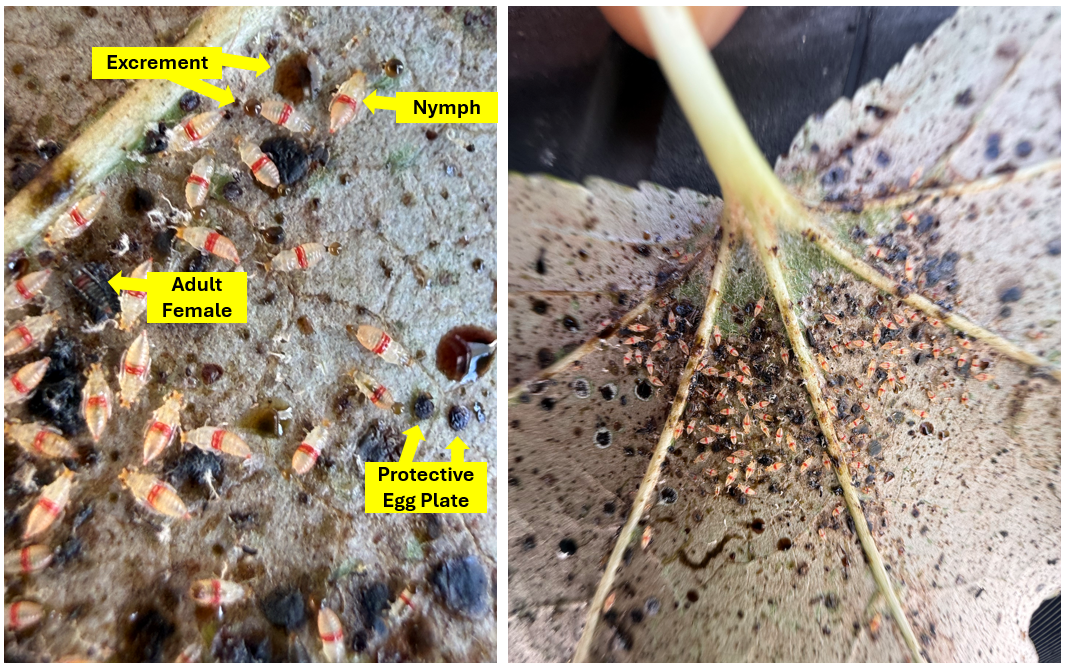
At a residence in the Walden on Lake Conroe area of Montgomery, two crepe myrtle trees in the front yard were showing decline indicators and aesthetic damage consistent with sap-feeding insect pressure.
Evaluation Findings:
Assessment documented a scale insect infestation affecting both crepe myrtles. Observable indicators were consistent with active scale presence and associated canopy stress, which can reduce vigor and contribute to progressive decline when populations remain established.
Intervention:
A targeted plant health care treatment was performed to suppress the scale infestation and reduce ongoing stress to the trees. Management focused on confirmed pest control and support of tree function to improve recovery potential.
Outcome (Observable):
Following treatment, scale pressure was brought under control and canopy condition stabilized. Subsequent monitoring documented improved foliage condition and renewed growth response consistent with successful pest suppression and recovery support.
Case Study: Volcano Mulch Correction - Russet Peak, Montgomery
Property Context:
At a residence in the Russet Peak area of Montgomery, trees across the property were surrounded by excessive mulch piled high against the trunks, commonly referred to as volcano mulch. The condition was present throughout the site and was affecting the overall tree population rather than a single tree.
Evaluation Findings:
Assessment documented buried root collars and obscured trunk flare across the property, consistent with chronic stress created by excessive mulch accumulation against the base of trees. This condition can alter oxygen exchange, trap moisture against the trunk, contribute to bark decay and basal disorders, and promote girdling root development. The distribution and consistency of the issue indicated a property-wide cultural problem requiring site-wide correction.
Intervention:
A corrective root collar management program was performed across the property to remove excess mulch from the base of each tree and restore visible root flare. Management focused on reestablishing proper trunk flare exposure and improving root-zone conditions by correcting mulch placement and depth.
Outcome (Observable):
Following correction, root flares were visible and mulch was returned to appropriate placement away from direct trunk contact. Subsequent monitoring documented improved overall tree performance trends and reduced stress indicators consistent with corrected root collar conditions and improved root-zone function.
Communities We Serve in Montgomery
Eric Putnam BCMA Inc. provides arborist-led tree care, Plant Health Care, and professional tree evaluations throughout Montgomery. Our Montgomery service area includes properties in communities such as:
- April Sound
- Bentwater
- Cape Conroe
- Del Lago
- Grand Harbor
- Hidden Forest Estates
- The Hills of Town Creek
- Walden
- Waterstone on Lake Conroe
- Wood Creek
* If your neighborhood is not listed, contact our office to confirm service availability for your property *
Nearby Cities We Serve
Eric Putnam BCMA Inc. also provides professional tree care and arborist services in communities near Montgomery. Select a city below to learn more about our services in that area.

Request an Arborist Evaluation in Montgomery, TX
If you have questions regarding canopy stability, structural defects, or long-term tree health in Montgomery, request an evaluation with a certified arborist. Recommendations are based on documented findings and site-specific conditions.
Book an appointment below
Get a quote
Contact Us
Liriope’s Muse - Expert Tree Care Tips