


Arborist Services in Jersey Village, TX
Tree Risk Assessment and Structural Stability Planning in Jersey Village, Texas
Jersey Village, TX is an established residential community in the northwest Houston area surrounded by major corridors including US-290 and Beltway 8. Tree management in this area often involves evaluating mature canopy growing within confined urban environments. Many properties contain older trees planted decades ago, now expanding within limited root zones near streets, sidewalks, and homes. As canopy size increases, root systems restricted by surrounding infrastructure carry the structural load.
Clay-based soils dominate the area and are often compacted from long-term development. These conditions limit root expansion and reduce oxygen availability, affecting anchorage and overall structural performance. We provide arborist-led services in Jersey Village focused on documented structural assessment and preservation-based planning.
Local Tree and Property Conditions in Jersey Village, TX
Jersey Village consists of established neighborhoods with limited planting space. Trees are commonly located near roadways, driveways, and foundations, restricting root growth.
Soils are predominantly clay and have experienced long-term compaction. Drainage is slow, and moisture retention can vary depending on site conditions.
Trees often develop shallow root systems due to soil resistance, which may limit support as canopy expands over structures and access areas.
Evaluation Philosophy in Jersey Village
Evaluation focuses on mature canopy, root confinement, soil behavior, and proximity to structures.
Assessment frequently includes:
• Root anchorage within restricted urban soils
• Structural attachment integrity in mature trees
• Soil compaction and drainage influence
• Canopy load over homes and driveways
Recommendations are based on observed structural conditions and site-specific factors.
Priority Services in Jersey Village, TX
Tree Risk Assessment:
The assessment focuses on trees near homes, streets, and utilities, with attention to structural defects and canopy load on targets.
Plant Health Care and Root-Zone Management:
Services address soil compaction and root limitations when site conditions affect performance.
Structural Pruning:
Pruning targets specific defects or imbalances within the mature canopy. Work is objective-based.
Removal Planning and Tree Disposition Guidance:
Removal is considered when structural reliability cannot be improved. Planning accounts for access and surrounding infrastructure.
Environmental Considerations in Jersey Village
Jersey Village experiences typical Gulf Coast weather patterns, including heavy rainfall and heat. Clay soils retain moisture, influencing root conditions and stability. Urban development further limits root space and affects drainage behavior across properties. These factors contribute to long-term structural considerations in mature canopies. Preservation-first management remains the priority when mitigation is feasible.
Recent Work in Jersey Village, TX
Case Study #10587: Scale, Whitefly, and Mealybug Treatment - Jersey Village
Property Context:
At a property in Jersey Village, trees throughout both the front and back yard were impacted by sap-feeding insect pressure. The treatment scope included all trees on the property, plus beds and surrounding soils and grasses in both the front and back yard to ensure comprehensive coverage.
Evaluation Findings:
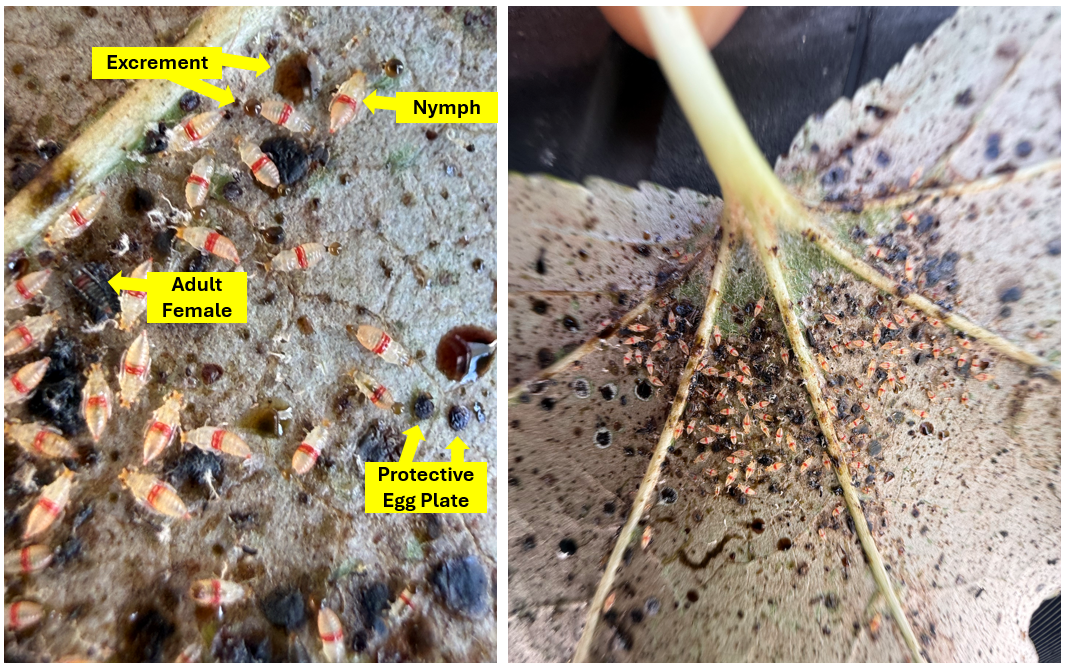
Assessment documented indicators consistent with scale, whiteflies, and/or mealybugs affecting the landscape. Findings supported active sap-feeding pressure contributing to reduced vigor and canopy stress, with honeydew production supporting sooty mold development on leaves and bark. Pest pressure can be suppressed quickly, but sooty mold typically remains until the plant naturally sheds affected surfaces over time.
Intervention:
A scale, whitefly, and mealybug treatment was performed for all trees across the property, including beds and surrounding soils and grasses. Systemic insecticide imidacloprid and contact insecticide permethrin were applied to all above-ground and below-ground plant parts to suppress the insects damaging the trees. A surfactant was added to improve uptake by opening stomata in the cell walls, allowing insecticides to be fully integrated throughout the treated trees. This program was paired with a biostimulant treatment that includes complete fertilization of the trees. The biostimulant program included humic acid to support nutrient uptake of magnesium, calcium, and iron; stabilize nitrogen; and promote beneficial fungi. It also included cooking molasses to provide carbohydrates and micronutrients, along with microbe and fungi inoculants to support a healthy soil ecosystem, including beneficial mycorrhizal fungi and beneficial bacteria.
Outcome (Observable):
Following treatment, pest pressure was brought under control and overall landscape performance stabilized. The scale, whiteflies, and/or mealybugs were suppressed within about one week, while sooty mold remained visible longer and gradually diminished as the trees and shrubs naturally shed affected foliage and surfaces. Subsequent monitoring documented improved foliage condition and renewed growth response consistent with successful suppression and recovery support.
Communities We Serve in Jersey Village
Eric Putnam BCMA Inc. provides arborist-led tree care, Plant Health Care, and professional tree evaluations throughout Jersey Village. Our Jersey Village service area includes properties in communities such as:
- Jersey Village Country Club Estates
- Lakes of Jersey Village
- Park at Jersey Village
- Willow Pointe
- Willowbridge
- Willowlake
- Winchester Country
- Winchester Country Trails
- Winchester Meadows
- Winchester Village
* If your neighborhood is not listed, contact our office to confirm service availability for your property *
Nearby Cities We Serve
Eric Putnam BCMA Inc. also provides professional tree care and arborist services in communities near Jersey Village. Select a city below to learn more about our services in that area.

Request an Arborist Evaluation in Jersey Village, TX
If you have questions regarding canopy stability or structural defects in Jersey Village, request an evaluation with a certified arborist. Recommendations are based on documented findings and site-specific conditions.
Book an Appointment
Get a quote
Contact Us
Liriope’s Muse - Expert Tree Care Tips