


Professional Arborist Services in Houston, TX
Eric Putnam BCMA has provided expert tree care in Houston and surrounding communities for more than 25 years. As a Board Certified Master Arborist with the International Society of Arboriculture, Eric brings decades of scientific understanding and practical experience to help homeowners and property managers make informed decisions about tree health, stability, and long-term performance.
Our approach is rooted in evaluation and preservation. We do not sell unnecessary work. We focus on responsible tree care that supports structural integrity and biological function, with clear documentation and professional standards guiding every recommendation.
Why Tree Care in Houston Requires Expert Evaluation
Trees in Houston face a distinct set of environmental pressures that affect how they grow, respond to stress, and decline over time.
•
Soil behavior: Coastal plain soils often retain moisture, causing prolonged saturation that reduces oxygen availability to the root zone and can weaken anchorage.
•
Construction impacts: Development, trenching, grading, and driveway work commonly disturb critical root zones, leading to delayed canopy decline.
•
Storm interaction: Even moderate storms can interact with structural defects or compromised root systems to increase risk.
•
Species variability: Live oak, water oak, pine, and ornamental species each respond differently to stresses like moisture fluctuation, pruning, and pests.
These conditions often affect trees below grade long before visible canopy symptoms appear. A professional evaluation goes beyond surface symptoms to assess root-zone influence, attachment reliability, and potential risk to targets such as homes, utilities, and people.
Our Arborist Evaluation Process
Our evaluations are thorough and defensible, considering:
• Structural quality of trunk and scaffold limbs
• Root-zone condition, soil history, and prior disturbance
• Evidence of internal decay or compromised wood
• Species-specific risk factors and growth patterns
• Target proximity and real-world consequences of failure
Evaluation leads to documented recommendations, clear risk ratings, and a plan for monitoring or mitigation when appropriate. We do not trim for appearance. We evaluate for safety, function, and long-term health.
Plant Health Care (PHC) and Soil Management
Many tree health problems in Houston originate underground. Compaction, oxygen limitation, moisture swings, and biological imbalance weaken root systems and reduce resilience.
Our Plant Health Care (PHC) programs are designed to support function and resilience rather than forced growth. Evaluations may include:
• Soil structure and compaction assessment
• Root-zone aeration where indicated
• Targeted nutrition based on site condition
• Biostimulant-oriented support for recovery
• Integrated pest and disease support when necessary
PHC is foundational to durable tree performance in Houston’s unique landscapes. We emphasize improving soil function and root health before recommending above-ground work.
Structural Pruning and Branch Tip Reduction
Pruning decisions are made with structural logic, not aesthetics.
• Branch tip reduction is often used to reduce leverage forces on stems and limbs while preserving canopy function.
• Structural pruning is implemented only when necessary to correct significant defects or improve long-term structural form.
We do not recommend broad canopy thinning as a routine measure for storm preparation. Wind behavior, species response, and root stability all influence how trees respond in storms. Defect-based pruning, root-zone support, and realistic target mitigation provide better outcomes than mass canopy reduction.
Tree Removal When Necessary
Tree removal is recommended only when:
• Structural reliability cannot be reasonably mitigated
• Decline or defect progression exceeds recovery thresholds
• Risk to targets cannot be reduced to acceptable levels through other means
In Houston, removal planning also includes:
• Consideration of protected tree classifications
• Right-of-way requirements and ordinance awareness
• Tree disposition planning when regulatory steps apply
We assist property owners in identifying when regulatory or protected tree rules apply and guide compliance before work proceeds.
Removal operations are planned with attention to access constraints, target exposure, and property protection, especially in dense residential areas.
Regulatory Awareness and Protected Trees
Houston’s Tree and Shrub Ordinance includes classifications for protected trees and right-of-way protections tied to development activity. Regulatory requirements may involve:
• Documentation of protected tree status
• Replacement or mitigation planning
• Formal review steps
Our evaluations include identification of regulatory applicability so that property owners can make informed and compliant decisions before initiating work.
Documentation and Written Risk Reporting
When needed for insurance, HOAs, or property planning, we provide professional written recommendations and reports. These documents are consistent with standard arborist practice and support clear communication between stakeholders.
Houston Arborist Case Studies
Case Study #2553: Drought Stress Management - Pinebrook, Houston
Property Context:
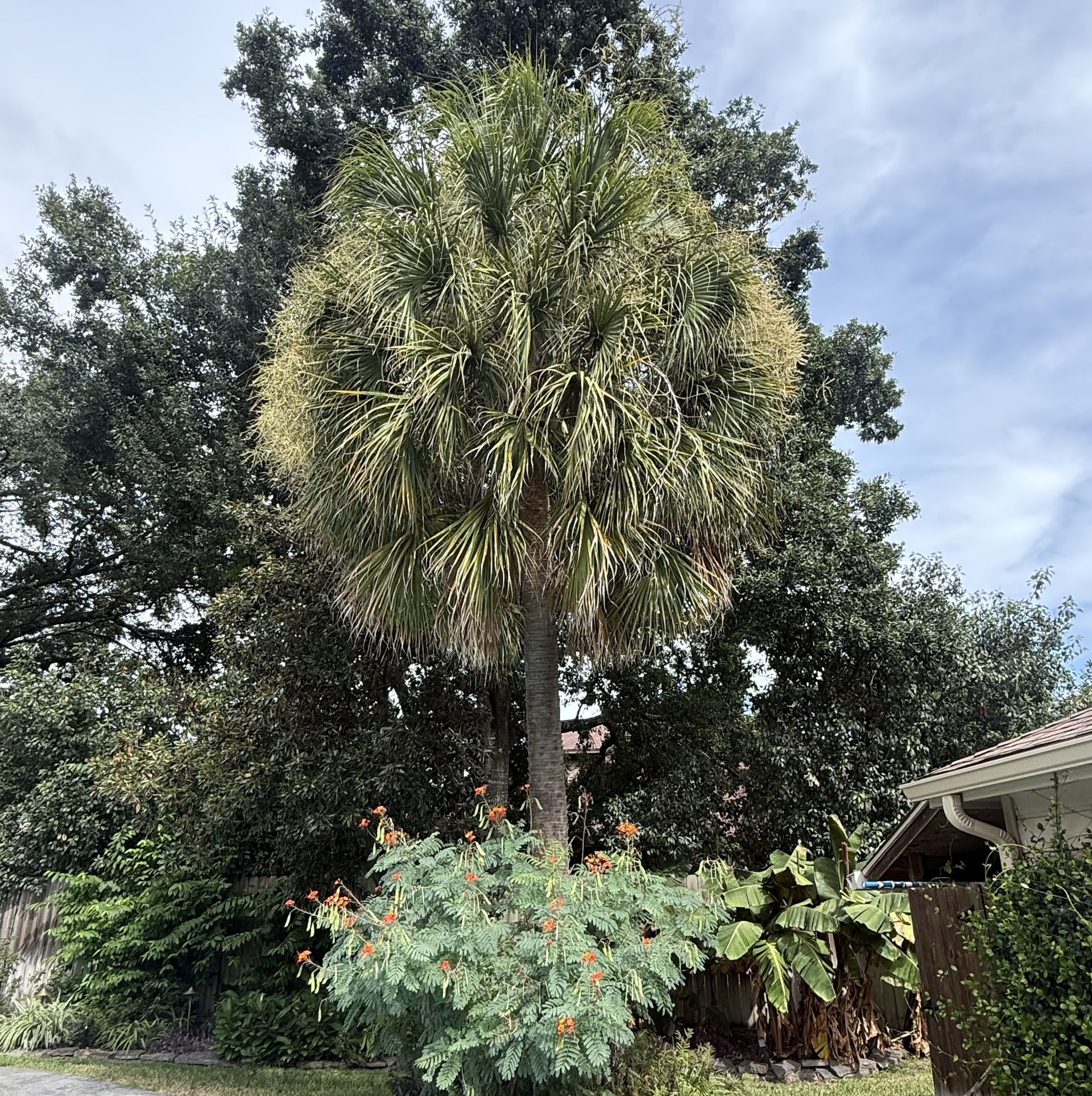
At a residence in Pinebrook (Houston), trees throughout the front and backyard exhibited signs of drought stress, including sparse foliage and reduced leaf size.
Evaluation Findings:
Assessment showed widespread canopy thinning and leaf discoloration consistent with prolonged moisture deficits. Soil conditions in the root zones confirmed dry conditions without adequate moisture retention during recent hot periods.
Intervention:
A targeted plant health care strategy was implemented, focused on improving root-zone conditions and supporting overall tree function. This included non-mechanical root-zone aeration and condition-based PHC support.
Outcome (Observable):
Canopy density improved after PHC treatment interventions, with noticeable increases in foliage condition and overall tree vitality during subsequent monitoring periods.
Case Study #2475: Herbicide Injury and Scale Infestation - Norhill, Houston
Property Context:
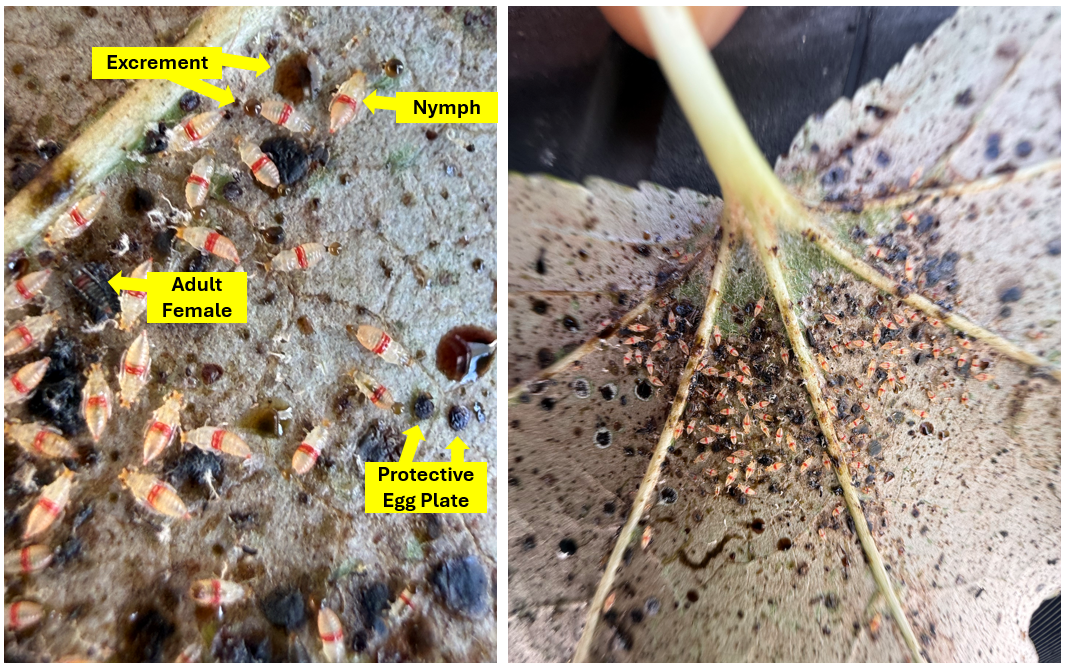
At a residential property in the Norhill area of Houston, the entire yard (front and back) was experiencing multiple stress factors, including visible herbicide injury on various plants, over-pruning on an ash tree, and a significant scale insect infestation on crepe myrtles.
Evaluation Findings:
Our assessment documented foliar damage consistent with herbicide exposure, structural imbalance due to prior over-pruning on the ash tree, and a heavy presence of scale insects on the crepe myrtle foliage.
Intervention:
We conducted targeted plant health care measures to eradicate the scale infestation and implemented a rejuvenation plan for the ash tree, focusing on improving canopy balance and support based on documented condition.
Outcome (Observable):
Following intervention, the scale insects were eradicated, and observable improvement in the ash tree’s canopy structure and overall health was noted during subsequent monitoring periods.
Case Study #2418: Armyworm Infestation Management - Montrose, Houston
Property Context:
At a residence in the Montrose area of Houston, three live oak trees in the front yard began showing rapid canopy stress consistent with active defoliation pressure. The timing and pattern of symptoms raised concern for an insect-driven event rather than normal seasonal leaf cycling.
Evaluation Findings:
Assessment confirmed an armyworm infestation impacting the live oaks. Observable indicators included active feeding activity and visible canopy impact consistent with defoliation stress. Condition documentation supported the conclusion that the primary driver of decline was pest pressure rather than site decline alone.
Intervention:
A targeted plant health care response was implemented to eradicate the armyworms and reduce ongoing canopy stress. Treatments were applied based on confirmed pest presence and timed to interrupt feeding activity. Follow-up monitoring was used to verify treatment performance and confirm reduction in active infestation.
Outcome (Observable):
The armyworms were eradicated, and all three front yard live oaks showed observable health improvement during monitoring periods. Canopy condition stabilized and overall tree performance improved following removal of the defoliation pressure
Communities We Serve in Houston
Eric Putnam BCMA Inc. provides arborist-led tree care, Plant Health Care, and professional tree evaluations throughout Houston. Our Houston service area includes properties in communities such as:
- Afton Oaks
- Boulevard Oaks
- Braeswood Place
- Briar Forest
- Briargrove
- Clear Lake
- Eastwood
- Energy Corridor
- Garden Oaks
- Greater Heights
- Greenway / Upper Kirby
- Kingwood
- Lake Houston
- Lazybrook / Timbergrove
- Memorial
- Meyerland
- Montrose
- Museum Park
- Norhill
- Oak Forest
- Old Braeswood
- River Oaks
- Riverside Terrace
- Southgate
- Southampton Place
- Spring Branch
- Tanglewood
- Westbury
- Westchase
- Willow Meadows / Willowbend
* If your neighborhood is not listed, contact our office to confirm service availability for your property *
Nearby Cities We Serve
Eric Putnam BCMA, Inc. also provides professional tree care and arborist services in communities throughout the Houston area. Select a city below to learn more about our services in that area.

Request Professional Arborist Evaluation
If you need expert evaluation, structural pruning, soil-aware plant health care, or informed risk assessment in Houston, contact Eric Putnam BCMA to schedule a professional consultation. Our priority is safety, clarity, and long-term tree health.
Book an appointment below
Get a quote
Contact Us
Liriope’s Muse - Expert Tree Care Tips