

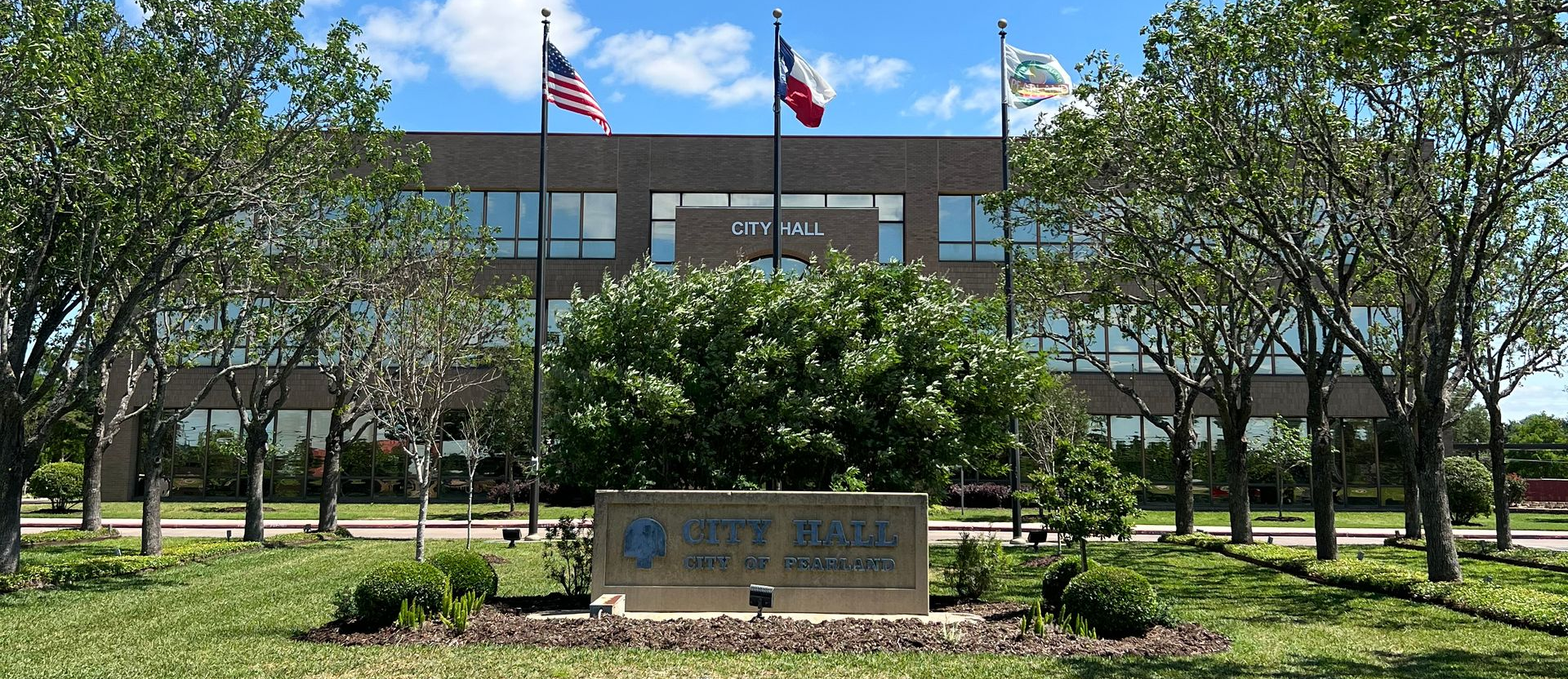
Arborist Services in Pearland, TX
Professional Tree Risk Assessment, Structural Pruning, and Plant Health Care in Pearland, Texas
Pearland, TX has grown rapidly over the past two decades, with extensive residential development across both Brazoria and Harris Counties. Newer subdivisions, grading activity, and expanding infrastructure have changed how trees establish and mature in this area. Tree care in Pearland requires evaluation that accounts for soil behavior, construction impacts, and long-term root performance, not just canopy appearance.
We provide arborist-led tree services in Pearland focused on documented evaluation, structural reliability, and plant health care designed to support long-term resilience.
Request a professional evaluation.
Local Tree and Property Conditions in Pearland, TX
Pearland sits on the Gulf Coastal Plain, where relatively flat terrain and clay-influenced soils can affect drainage and root oxygen availability, particularly in compacted areas. During periods of heavy rainfall, soil saturation can persist, especially where development has altered natural drainage patterns.
Large master-planned communities such as Shadow Creek Ranch and Silverlake include significant installed canopy planted during subdivision development. In these environments, trees often grow in fill soils or constrained root zones near driveways, sidewalks, and foundations.
Public areas such as Independence Park and Centennial Park reflect the city’s expanding urban canopy. As residential density increases, target exposure increases as well, meaning tree risk evaluation must consider proximity to homes, vehicles, and pedestrian areas.
Because of these conditions, successful tree care in Pearland often prioritizes root-zone assessment, soil management, and objective-based pruning rather than aggressive canopy reduction.
Arborist Evaluation Philosophy
In Pearland, tree health concerns are frequently connected to construction-related soil disturbance and long-term compaction. Trees may not show visible decline immediately following development activity. Symptoms can emerge gradually as root systems struggle with reduced oxygen exchange and limited expansion.
Professional evaluation focuses on:
- Structural attachment integrity
- Root-zone condition
- Soil compaction indicators
- Drainage patterns
- Target exposure
Recommendations are documented and prioritized based on observed conditions rather than cosmetic appearance.
Priority Services in Pearland, TX
Tree Risk Assessment:
With continued residential growth and mature canopy expansion, risk assessment in Pearland commonly addresses limbs over rooflines, trees near driveways, and structural defects that may not be obvious from the ground. We evaluate failure likelihood and potential targets before recommending mitigation or removal.
Plant Health Care and Soil Management:
In rapidly developing suburban environments, soil conditions frequently drive long-term decline. Our plant health care programs prioritize function and resilience, including:
- Non-mechanical root-zone aeration when indicated
- Soil condition assessment
- Mulch and root-zone corrections
- Targeted nutrient support when supported by site conditions
The goal is not forced growth, but improved structural stability and vitality over time.
Structural Pruning
Pruning is objective-based and defect-focused. In Pearland subdivisions, branch tip reduction may be appropriate where specific overextended limbs create risk. Structural pruning is performed when necessary to correct weak attachments or mitigate documented defects.
Broad canopy thinning is not promoted as a routine solution.
Removal Guidance and Planning
Removal is recommended when structural reliability cannot be reasonably mitigated. In dense residential neighborhoods, planning must account for access constraints, nearby structures, and property protection.
We also assist clients in understanding tree disposition considerations where regulatory or HOA guidelines may apply.
Common Service Scenarios in Pearland
Each recommendation is based on evaluation, not assumption.
• Post-construction decline in subdivision trees planted during development
• Limb extension over driveways in constrained lot configurations
• Root-zone stress following grading or drainage changes
• Structural correction of fast-growing canopy near rooflines
Recent Work in Pearland, TX
Case Study #2332: Magnolia Decline Following Embolism - Green Tee Terrace, Pearland
Property Context:
At a residence in the Green Tee Terrace area of Pearland, two established magnolia trees in the front yard began showing clear signs of decline. The homeowner reported a noticeable drop in performance and reduced vigor compared to prior seasons.
Evaluation Findings:
Assessment documented decline consistent with vascular disruption, described as an embolism affecting water transport. Observable symptoms included reduced canopy density and diminished shoot extension, consistent with impaired hydraulic function and stress in the crown.
Intervention:
A condition-based plant health care strategy was implemented to support recovery and stabilize performance. The focus was on improving functional support for the root zone and canopy while avoiding unnecessary stress to the trees during the recovery window. Work sequencing prioritized tree stability and physiological support rather than cosmetic pruning.
Outcome (Observable):
Both magnolia trees responded with visible new growth and recovery. Subsequent monitoring showed improved shoot development and better canopy appearance, consistent with regained function and improved vitality following intervention.
Case Study #3922: Girdling Root Stress From Excess Mulch - Shadow Creek Ranch, Pearland
Property Context:
At a residence in the Shadow Creek Ranch area of Pearland, three pine trees in the front yard were showing reduced vigor and early decline indicators. The trees were surrounded by heavy mulch piled up against the lower trunks.
Evaluation Findings:
Assessment documented excessive mulch accumulation against the trunk flare with a buried root collar. This common landscaping practice will cause advantageous roots that typically develop into girdling roots. This condition will cause chronic stress by altering oxygen exchange, moisture behavior, and normal root collar function. Visual indicators were consistent with reduced vigor associated with root collar and basal stress, rather than a primary foliar disease issue.
Intervention:
A corrective root zone and trunk flare management approach was implemented. Excess mulch was removed from the base to reestablish a visible root flare and improve root collar conditions. The treatment plan focused on reducing ongoing stressors at the base and supporting root function through condition-based plant health care.
Outcome (Observable):
All three pines produced noticeable new growth and demonstrated increased vigor following intervention. Subsequent monitoring showed improved canopy performance and stronger seasonal growth consistent with reduced root collar stress and improved root zone function.
Case Study #4006: Over Pruning Stress Recovery - Ryan Acres, Pearland
Property Context:
At a residence in the Ryan Acres area of Pearland, ash trees in the front yard were exhibiting reduced vigor following prior over-pruning. The canopy structure suggested excessive crown reduction and thinning that had diminished leaf area and increased stress exposure.
Evaluation Findings:
Assessment documented canopy imbalance and reduced functional foliage consistent with over-pruning stress. Observable indicators included sparse canopy density, weak shoot extension, and reduced overall vitality. Structural distribution suggested the trees were attempting to compensate through limited regrowth rather than maintaining a stable, well distributed crown.
Intervention:
A condition-based recovery approach was implemented to support restoration of canopy function and reduce ongoing stress. Management focused on avoiding additional canopy removal, promoting controlled regrowth, and supporting tree function through plant health care measures tailored to site conditions. Monitoring was used to guide timing and prevent repeat over-pruning.
Outcome (Observable):
Front yard ash trees showed increased vitality following intervention. Subsequent monitoring documented improved growth response and better canopy performance, consistent with recovery from over-pruning stress and improved overall tree function.
Communities We Serve in Pearland
Eric Putnam BCMA Inc. provides arborist-led tree care, Plant Health Care, and professional tree evaluations throughout Pearland. Our Pearland service area includes properties in communities such as:
- Green Tee
- Shadow Creek Ranch
- Silverlake
- Southdown
- Southlake
- Southern Trails
- Southwyck
- Stonebridge
- The Lakes at Countryplace
- The Lakes at Highland Glen
* If your neighborhood is not listed, contact our office to confirm service availability for your property *
Nearby Cities We Serve
Eric Putnam BCMA, Inc. also provides professional tree care and arborist services in communities near Pearland. Select a city below to learn more about our services in that area.

Consultative Tree Care in Pearland
If you have questions about tree health, structural concerns, or plant health care in Pearland, request a professional arborist evaluation. Our focus is preservation-first, documentation-driven, and aligned with long-term tree performance.
Book an appointment below
Get a quote
Contact Us
Liriope’s Muse - Expert Tree Care Tips