
Arborist Services in Texas City, TX
Coastal Exposure Tree Risk Assessment and Structural Evaluation in Texas City, Texas
Texas City, TX is a coastal community with residential neighborhoods influenced by proximity to Galveston Bay and open industrial corridors. Tree management in Texas City frequently involves evaluating structural reliability under sustained wind exposure and environmental variability typical of Gulf Coast settings.
We provide arborist-led services in Texas City focused on documented structural assessment, preservation-first planning, and long-term canopy stability.
Local Tree and Property Conditions in Texas City, TX
Texas City’s proximity to Galveston Bay creates open exposure conditions where trees may experience consistent wind influence. Unlike more sheltered inland communities, directional exposure over time can affect canopy balance and attachment integrity.
Flat coastal terrain and drainage systems may produce variable soil moisture patterns, particularly during extended rainfall events. Temporary soil saturation can influence root-zone oxygen availability.
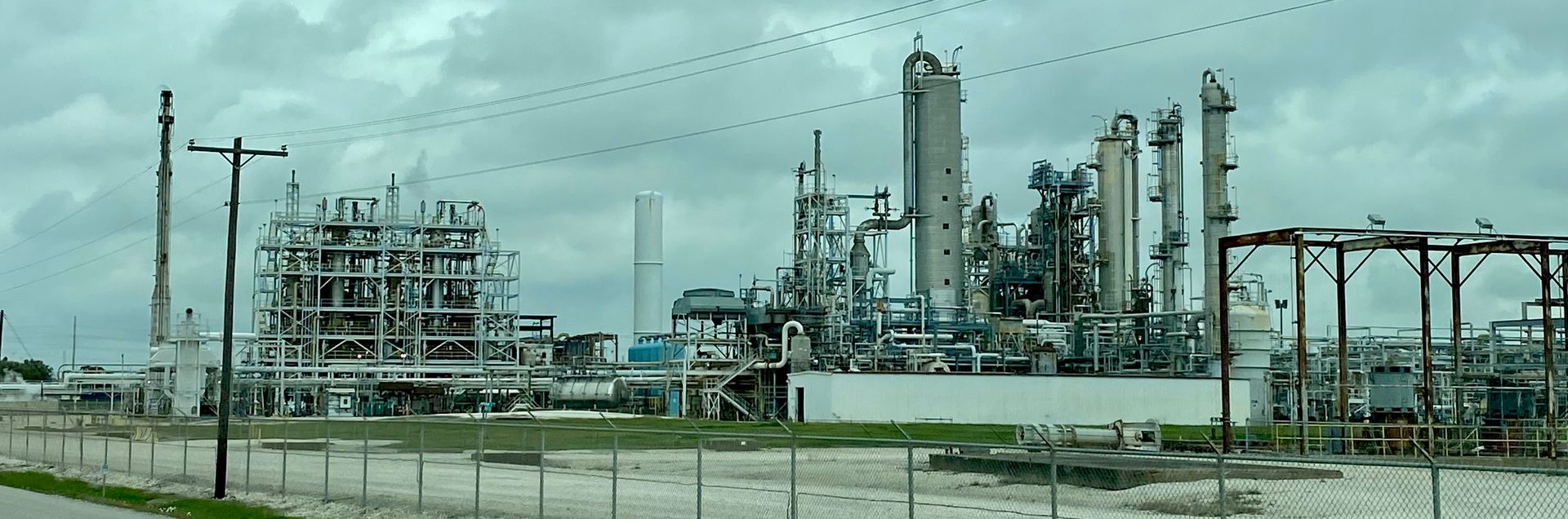
Residential neighborhoods often exist near commercial and industrial corridors, increasing target density relative to canopy distribution. Trees growing near infrastructure, roadways, and utility corridors require periodic structural evaluation.
Evaluation Philosophy in Texas City
Professional arborist evaluation in Texas City must account for coastal exposure, soil variability, structural attachment development, and proximity to infrastructure.
Assessment frequently focuses on:
• Structural attachment integrity under wind loading
• Root stability in moisture-variable soils
• Early identification of defect progression
• Canopy distribution relative to homes and infrastructure
Visible canopy density does not necessarily confirm structural resilience. Recommendations are based on documented findings and observed site conditions.
Priority Services in Texas City, TX
Tree Risk Assessment:
Risk assessment commonly addresses canopy extending over homes, driveways, sidewalks, and roadways. Structural inspection evaluates attachment strength, defect formation, and weight distribution. Where mitigation is feasible, branch-tip reduction or defect correction may be recommended based on documented structural findings.
Plant Health Care and Root-Zone Management:
Root-zone evaluation may be indicated where vitality decline appears associated with soil compaction or environmental stress.
Plant Health Care in Texas City focuses on improving functional resilience within the root environment when conditions warrant intervention.
Structural Pruning:
Structural pruning is objective-based and applied when documented defects or imbalances are identified. Broad canopy thinning is not promoted as a generalized preventive measure.
Recommendations prioritize maintaining structural stability while preserving canopy health.
Removal Planning and Tree Disposition Guidance:
Removal is recommended only when structural reliability cannot be reasonably mitigated. Planning includes evaluation of access logistics, surrounding infrastructure, and property protection.
When regulatory considerations apply, we assist property owners in identifying documentation requirements prior to proceeding.
Environmental Considerations in Texas City
Texas City’s coastal location and open exposure require evaluation that accounts for evolving structural development under sustained wind patterns.
Preservation-first management remains the priority when mitigation remains feasible.
Recent Work in Texas City, TX
Case Study #2402: Lightning Strike Treatment - Baypointe Manor, Texas City
Property Context:
At a residence in the Baypointe Manor area of Texas City, a front yard live oak was struck by lightning. The event caused sudden injury and immediate concern regarding canopy performance, structural condition, and decline risk.
Evaluation Findings:
Assessment documented injury patterns consistent with a lightning strike, including damage aligned with electrical discharge through trunk tissues and associated stress response in the crown. Findings supported elevated risk for follow-on decline due to vascular disruption and internal tissue injury that can continue developing after the initial event.
Intervention:
A targeted treatment and recovery plan was implemented to support the live oak following the lightning strike. Management focused on stabilizing tree function through condition-based care and reducing secondary complications while the tree responded to injury.
Outcome (Observable):
Following intervention, canopy performance stabilized and recovery indicators were observed during subsequent monitoring periods. The live oak showed improved overall function consistent with successful post strike support and reduced progression of decline.
Case Study #2274: Transplant Shock - Tarin, Texas City
Property Context:
At a residence in the Tarin area of Texas City, newly planted dwarf hollies and Chinese hollies across the landscape began showing stress consistent with transplant shock during the establishment period.
Evaluation Findings:
Assessment documented indicators consistent with transplant shock affecting the newly installed hollies. Observations supported limited root establishment and reduced functional uptake capacity typical of recent installation, resulting in reduced vigor and stress symptoms as the plants adjusted to site conditions.
Intervention:
A condition-based treatment program was implemented to reduce transplant shock and improve establishment success for the dwarf hollies and Chinese hollies. Management focused on supporting root development, improving root-zone function, and minimizing additional stress during the critical establishment window.
Outcome (Observable):
Following treatment, the newly planted hollies showed improved vigor and stabilization of foliage condition. Subsequent monitoring documented improved establishment trends and renewed growth response consistent with successful transplant shock support.
Case Study #190: Over-Pruning Recovery - Rainsong, Texas City
Property Context:
At a residence in the Rainsong area of Texas City, two live oak trees in the front yard had been over-pruned. The homeowner reported reduced canopy performance and concern for long term health following the pruning event.
Evaluation Findings:
Assessment documented canopy conditions consistent with over-pruning, including reduced functional leaf area and canopy imbalance. Observable indicators included thinning in the remaining crown and stress response consistent with excessive canopy removal, increasing vulnerability to environmental stress and slowing recovery potential.
Intervention:
A condition-based plant health care treatment was recommended to support recovery and improve overall tree function following over-pruning. The approach focused on stabilizing tree physiology, supporting root-zone function, and promoting controlled regrowth while avoiding additional canopy reduction during the recovery period.
Outcome (Observable):
This case study documents a treatment need based on the impacts of over-pruning. An observable response is expected to be documented through monitoring after treatment implementation, with the goal of improving vitality and supporting stable canopy redevelopment over time.
Communities We Serve in Texas City
Eric Putnam BCMA Inc. provides arborist-led tree care, Plant Health Care, and professional tree evaluations throughout Texas City. Our Texas City service area includes properties in communities such as:
- Central Park
- Chelsea Manor
- Grand Cay Harbor
- Heron's Landing
- Mainland Park
- Pearlbrook
- Rainsong
- Seacrest
- Snug Harbor
- Wayside Place
* If your neighborhood is not listed, contact our office to confirm service availability for your property *
Nearby Cities We Serve
Eric Putnam BCMA Inc. also provides professional tree care and arborist services in communities near Texas City. Select a city below to learn more about our services in that area.

Request an Arborist Evaluation in Texas City, TX
If you have questions regarding canopy stability, structural defects, or long-term tree health in Texas City, request an evaluation with a certified arborist. Recommendations are based on documented findings and site-specific conditions.
Book an appointment below
Get a quote
Contact Us
Liriope’s Muse - Expert Tree Care Tips