
Liriope’s Muse: Tree Care Tips from a Master Arborist
TRUSTED TREE CARE SERVICES SINCE 1970
Liriope's Muse - Arborist observation: Asian Cycad Scale
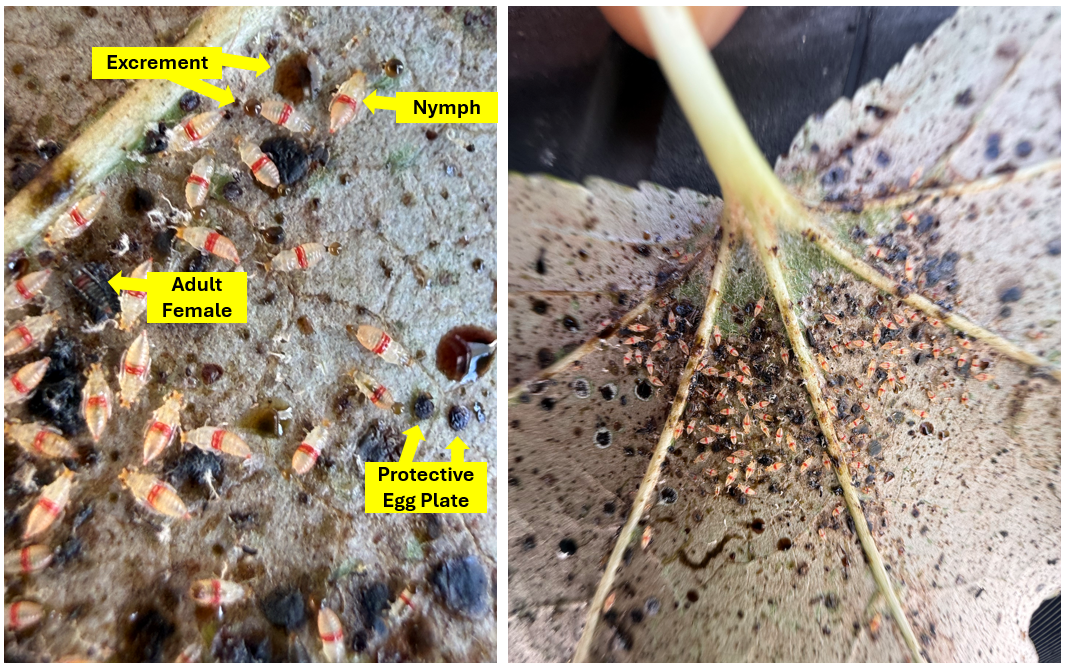
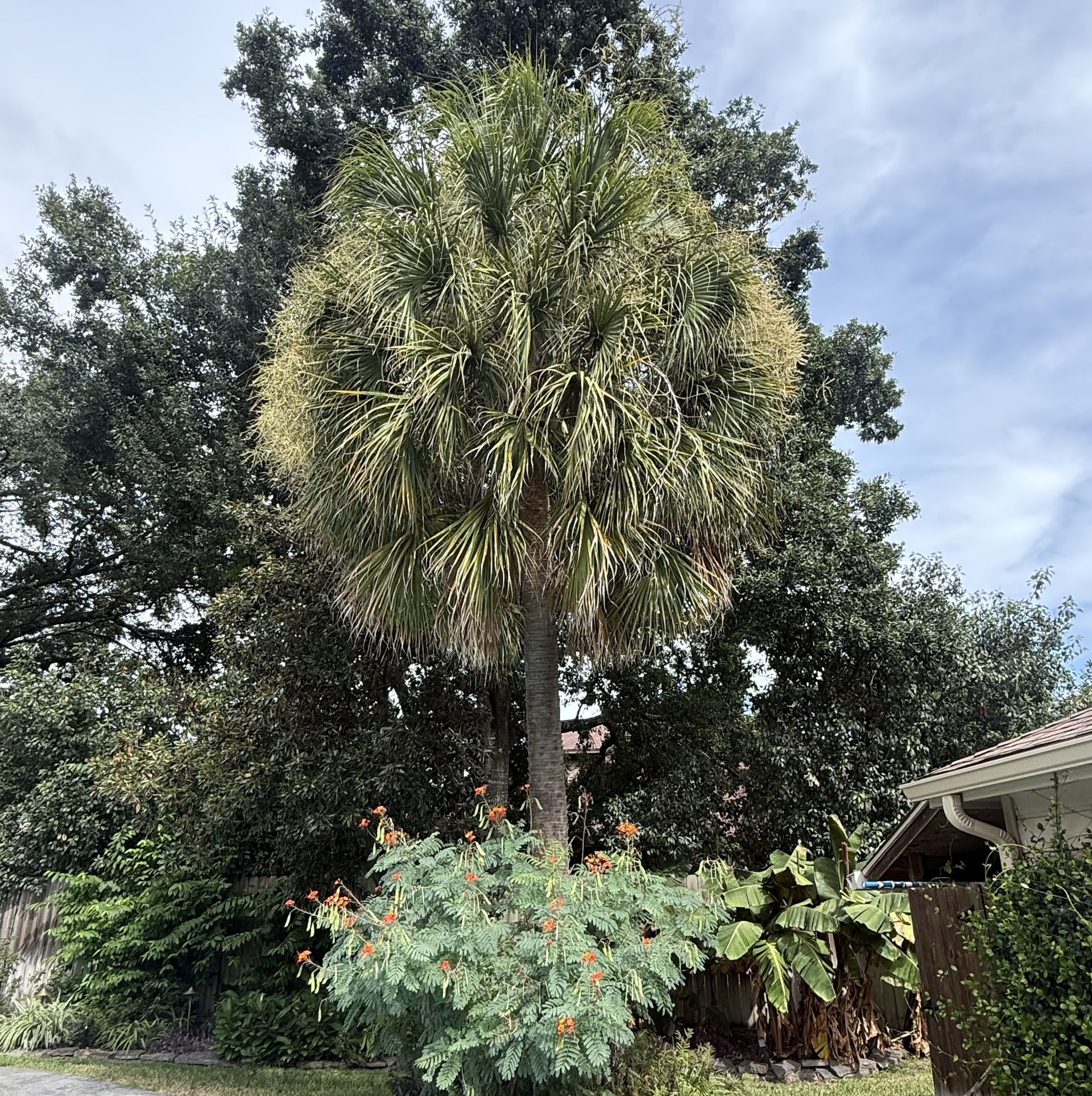
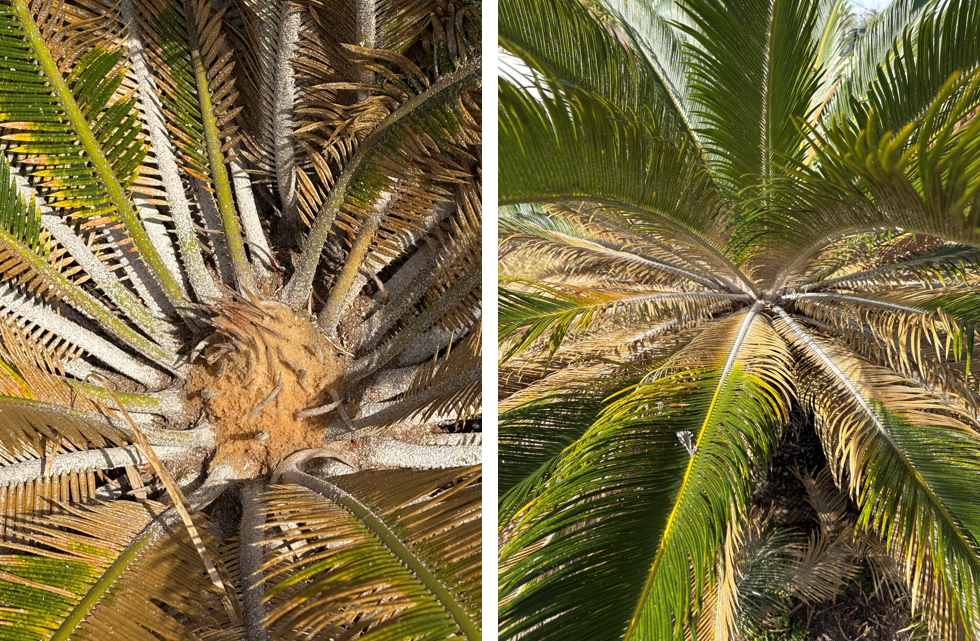
In the past few months, our field Arborists have noticed a drastic increase in Asian cycad scale infestation of sagos. They have observed many sagos all across the greater Houston area, presenting with a thick white coating starting at the trunk and spreading outwards, covering the fronds completely in the most serious cases. The arborists have noted that initial symptoms of infestation include small yellow spots on the upper surface of fronds, and as the infestation progresses, fronds become brown and desiccated.
Asian cycad scale, more formally Cycad Aulacaspis Scale (Aulacaspis yasumatsui), is an armored scale insect with piercing-sucking mouthparts that feeds by extracting sap from cycad tissues, steadily depleting the plant’s resources and weakening overall vigor; in heavy or prolonged infestations, this can lead to severe decline and plant death in a very short period of time. These scales are further protected by a dense coating consisting of layers of wax, shed skins from previous generations, and dead scales, forming a thick “crust” that shields the insects and makes them largely resistant to many contact pesticide applications.
Unlike other species of scale, the Asian Cycad Scale has been known to attack the roots of the plant up to 2 feet deep! This makes it particularly persistent because if an infestation is not fully controlled, even a small number of surviving scale bugs can rapidly re-establish a colony.
Spread
Asian cycad scale does not readily disperse long distances on its own. The insects are extremely small and lack wings or other effective means of long-range movement, so new infestations most commonly occur through human-assisted transport, particularly the movement of infested nursery stock, plant debris, or improperly handled/dumped cycads that still harbor live scale (including on roots and in leaf bases).
Control
When left unchecked, severe infestations can kill a sago in a matter of weeks to months, so these infestations should be taken seriously, and your sago needs to be treated as soon as you notice signs of the scale’s presence.
Many resources, including the listed UFAS will recommend the use of horticultural oils weekly for at least a month to keep the populations at bay, but we do not recommend the use of any sort of horticultural oil as the oils can increase heat load on exposed tissues and elevate the risk of sunscald/phytotoxicity, often resulting in additional plant stress and injury that outweighs the limited level of scale control achieved. Typically, horticultural oils provide only limited suppression and are rarely sufficient as a stand-alone control for established infestations. Because they work primarily through direct contact, they require thorough coverage and multiple repeat applications to impact successive life stages.
Since these scales are coated in a thick waxy armor, making them nearly impossible to penetrate with a pesticide from the outside(or by contact). So, we’ve found it best to target them using a systemic pesticide. A systemic pesticide is one that is absorbed by and translocated throughout the plant, making all parts of it toxic to the pests feeding on it without harming the plant. This includes the trunk, leaves, cones, seeds, roots, and most notably the sap of the plant. When the scales feed on treated tissues, they ingest the pesticide and are killed. In other words, rather than relying on contact sprays to reach insects protected under an armored covering, we manage them systemically, treating the plant so the control comes from the inside out.
In our field experience, applications of Acephate 97 (brand name Orthene) paired with our biostimulant to support uptake and overall plant vigor, have provided excellent control of cycad aulacaspis scale populations and successful recovery of affected sagos.
Resources:
https://www.texasinvasives.org/pest_database/detail.php?symbol=20
https://gardeningsolutions.ifas.ufl.edu/care/pests-and-diseases/pests/cycad-aulacaspis-scale/
https://www.ctahr.hawaii.edu/oc/freepubs/pdf/ip-23.pdf
Liriope’s Muse - Expert Tree Care Tips