

Arborist Services in San Leon, TX
Tree Risk Assessment and Structural Stability Planning in San Leon, Texas
San Leon deserves a more grounded approach than a stock coastal page. It is a long-established bay community in Galveston County, recognized by the Census as a CDP, with local history tied to Galveston Bay, Dickinson Bayou, the 1900 hurricane, and a later shift toward commercial fishing. That history matters because tree care here is not happening in an abstract suburb. It is happening in a place with real waterfront exposure, working-community roots, and a landscape shaped by weather and water.
Local anchors such as Desoto Park at Avenue J and 6th Street, LaSalle Park at 18th Street and Avenue C, and the FM 517 corridor show how San Leon’s canopy sits close to neighborhood streets, public gathering points, and bay-oriented properties rather than large master-planned blocks. The San Leon Municipal Utility District offices on 24th Street also reflect the street-grid pattern that defines much of the community.
In San Leon, tree management should protect what gives the community its character while staying honest about risk. Broad liveable shade, open-grown canopy, and older waterfront lots can be assets, but they can also carry long lateral limbs, exposure-driven imbalance, and below-grade issues tied to repeated saturation. The right response is careful documentation and standards-driven judgment, not generic thinning or reflexive removal. Eric Putnam BCMA’s published approach is diagnose-first and standards-driven, which fits this kind of site-specific community well.
Local Tree and Property Conditions in San Leon, TX
San Leon’s setting is unusually specific. Galveston County’s community history notes that the original land bordered Galveston Bay and Dickinson Bayou, and the area later became known for orchards before shifting toward commercial fishing. That helps explain why the community includes both neighborhood lots and a more open bay-facing pattern than many inland areas. Trees here often grow with more wind exposure and fewer adjacent canopy buffers than trees in denser suburban neighborhoods.
Floodplain and drainage context are also central here. Galveston County maintains countywide GIS mapping, current and historical FEMA flood insurance rate maps, and formal floodplain permitting through its Engineering, Floodplain Permitting & Right-of-Way functions. In practical arboricultural terms, that means elevation, drainage, runoff paths, and flood history are not side notes in San Leon. They are part of how root performance and structural stability have to be interpreted.
Development pressure is not standing still either. TxDOT is actively advancing major work on FM 517 and SH 146 in this part of Galveston County. Those projects matter because corridor widening, added hardscape, and roadway changes can alter drainage behavior, constrain rooting area, and increase target exposure near homes, driveways, and travel routes. In San Leon, some of the most important tree questions are not just about species or age. They are about how the site has changed around the tree.
Evaluation Philosophy in San Leon
Professional arborist evaluation in San Leon should start with the actual site, not a generic assumption about coastal trees. The community’s bayfront setting, county floodplain oversight, and road-corridor changes mean recommendations should be based on documented structure, root-zone conditions, and realistic target exposure. A tree can look full from the street and still have a meaningful structural defect. A tree can also look irregular and still be stable enough for monitoring rather than immediate heavy work.
Assessment frequently focuses on:
- Structural attachment integrity in open-grown canopy
- Root-zone performance where saturation, runoff, or compaction may influence stability
- Canopy distribution relative to homes, driveways, streets, and public-use spaces
- Early identification of defect progression before failure occurs in a higher-exposure setting
That approach is especially important in San Leon because the community combines neighborhood streets, public parks, bay-oriented exposure, and flood-sensitive ground conditions in a relatively compact area.
Priority Services in San Leon, TX
Tree Risk Assessment:
Risk assessment in San Leon often centers on mature limbs over homes, bay-facing lots, neighborhood roads, and public-use spaces such as Desoto Park and LaSalle Park. In some cases, the concern is overextended lateral growth and end weight. In others, it is whether repeated saturation or site alteration has weakened long-term root support. The purpose of assessment is to determine whether a tree should be monitored, mitigated, or removed only when structural reliability can no longer be reasonably improved.
Plant Health Care and Root-Zone Management:
Plant Health Care in San Leon is often most useful when decline appears tied to site limitations rather than just canopy appearance. Floodplain conditions, runoff, compaction, and coastal exposure can all reduce below-grade function over time. Where intervention is warranted, the goal should be improved resilience and root performance, not forced top growth. In a place like San Leon, the environment often fails the tree before the tree visibly fails in the environment. That is exactly why root-zone diagnosis matters.
Structural Pruning:
Structural pruning should remain objective-based. In San Leon, that may mean reducing a specific overextended limb, correcting imbalance, or addressing a documented weak attachment near a home, drive, or street corridor. Broad canopy thinning is not a default solution. Especially in open coastal settings, pruning should be used to manage load and improve structure while preserving the shade and character that matter to the property and the community.
Removal Planning and Tree Disposition Guidance:
Removal should be recommended only when structural reliability cannot be reasonably improved or when target exposure makes continued retention unacceptable. In San Leon, planning also has to account for tight residential access, drainage-sensitive ground, roadway proximity, and the practical limits of working on waterfront-adjacent properties. Removal logistics and property protection are part of the recommendation, not an afterthought.
Environmental Considerations in San Leon
San Leon’s environmental context is not generic coastal scenery. It is a real combination of Galveston Bay adjacency, Dickinson Bayou history, open wind exposure, and county-managed floodplain constraints. The county’s own history records the community’s destruction during the 1900 hurricane, and current county floodplain tools remain active for the area today. That means wind, water, and site drainage are long-term structural variables here, not rare exceptions.
This is also why a preservation-first approach matters in San Leon. Trees here are part of how the community looks and feels, but they need to be evaluated honestly within the realities of bayfront exposure and flood-sensitive ground. Periodic professional review helps identify structural concerns early, while mitigation is still feasible and before a valued tree turns into an avoidable loss.
Recent Work in San Leon, TX
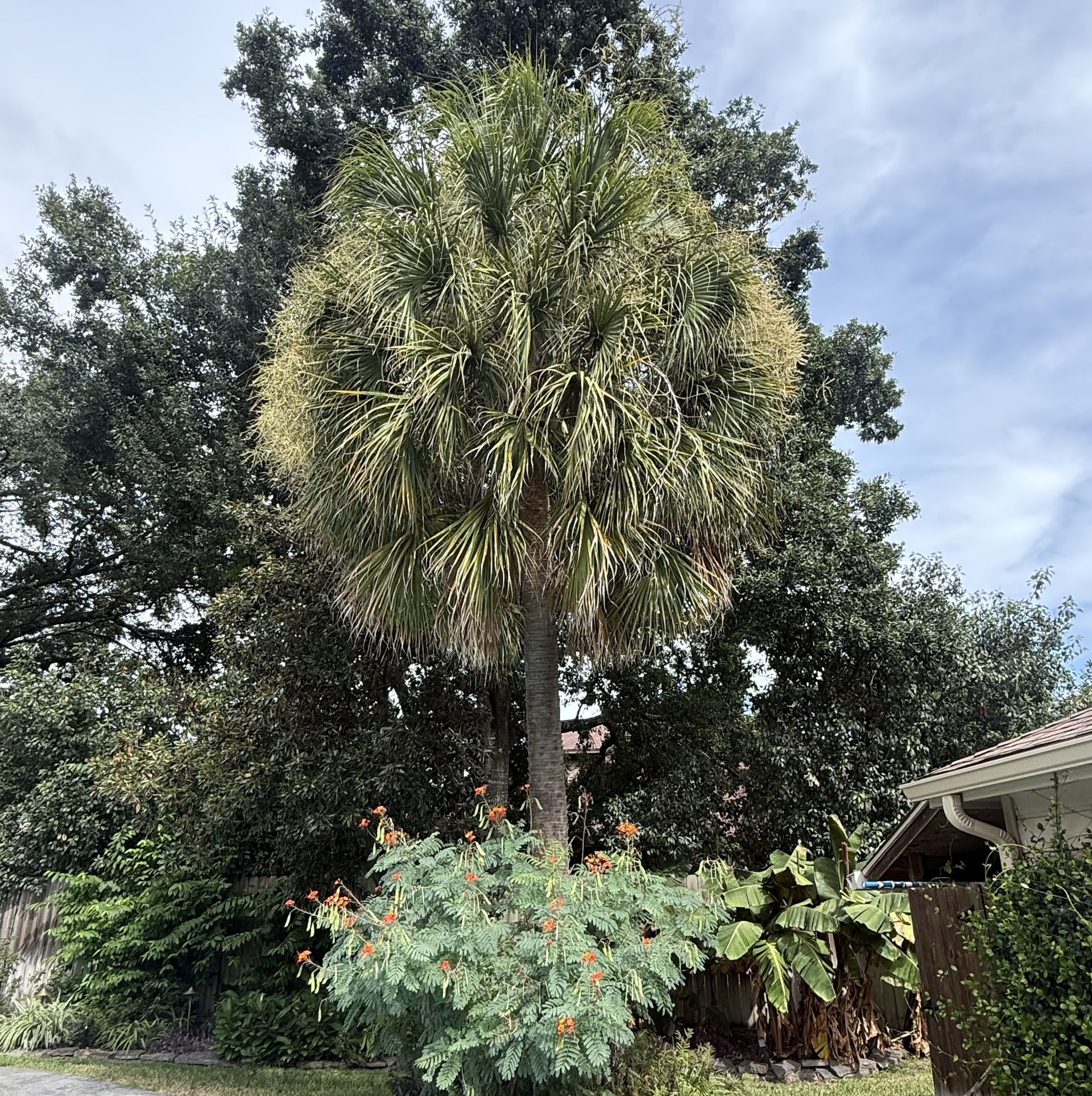
Case Study #1645 and #11076: Tree Planting Service, 12 Regenerated Florida Sabal Palms With Fill Dirt, Pier 6, San Leon
Property Context:
At Pier 6, formerly Bubbas Shrimp Palace, in San Leon, a large-scale palm installation was planned to enhance the property’s landscape and coastal character. The planting plan includes twelve Florida sabal palms, approximately 28 feet tall, with planting materials and grading support to ensure proper installation.
Evaluation Findings:
Assessment supported the use of regenerated Florida sabal palms rather than freshly dug palms. Regenerated palms have a greater likelihood of survival because they have been through a recovery period that supports improved establishment potential compared to palms installed immediately after harvest. The evaluation also recognized that large palms require proper soil preparation and grade management to ensure stable planting conditions.
Intervention:
A tree planting service was recommended for installation of twelve Florida sabal palms, approximately 28 feet tall. The scope includes the use of fill dirt for the plantings to achieve proper grade, support stable root-zone conditions, and ensure the planting pits and surrounding areas are prepared for successful installation and establishment.
Outcome (Observable):
All twelve palms established successfully and are thriving. Subsequent observation confirmed strong performance and healthy appearance consistent with successful installation and favorable establishment response.
Case Study #10381: Pine Tip Borer and Moth Treatment - Bayline, San Leon
Property Context:
At a residence in the Bayline area of San Leon, three pine trees in the backyard were identified as needing pest management due to suspected pine tip borer and moth activity. The recommended scope includes the three pines and the surrounding soils and grasses to support effective treatment coverage.
Evaluation Findings:
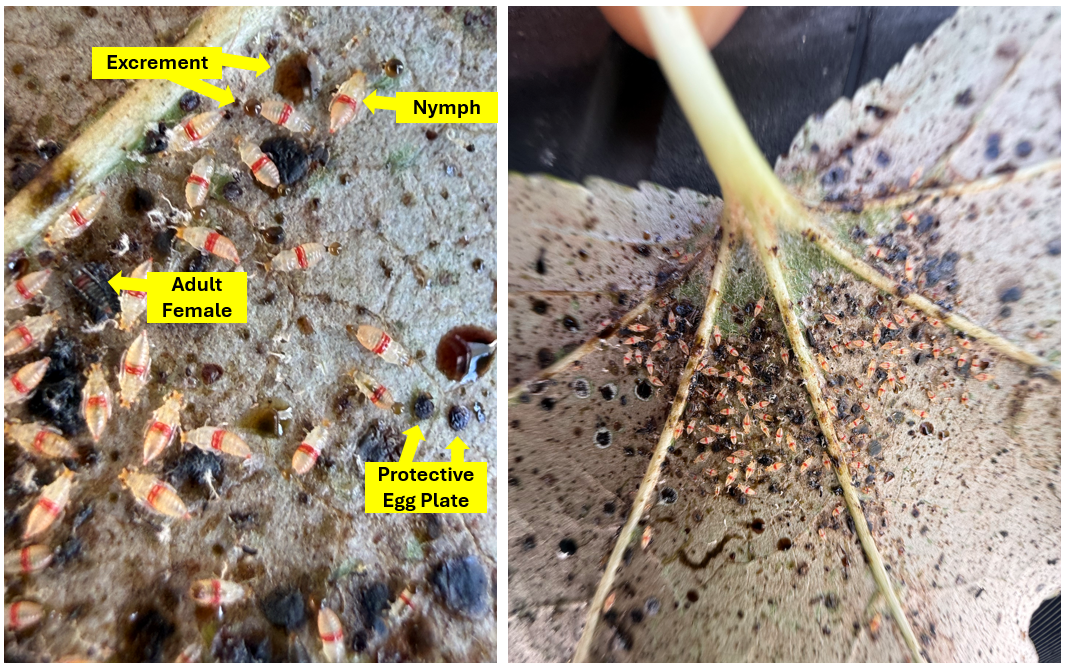
Assessment documented indicators consistent with pine tip borer and moth related damage impacting the current season’s shoots. Observable signs supported active or elevated pressure contributing to reduced shoot extension, tip dieback, and uneven canopy development, increasing the likelihood of continued growth suppression if not addressed.
Intervention:
A pine tip borer and moth treatment was recommended for the three backyard pine trees, including the surrounding soils and grasses. The recommended approach focuses on suppressing active pressure during susceptible growth stages and supporting overall tree function through condition-based plant health care applied across the treatment area.
Outcome (Observable):
Following treatment, pest pressure was brought under control and new growth stabilized. Subsequent monitoring documented improved shoot development and improved overall vigor across the three pines, consistent with successful suppression and recovery support.
Communities We Serve in San Leon
Eric Putnam BCMA Inc. provides arborist-led tree care, Plant Health Care, and professional tree evaluations throughout San Leon. Our San Leon service area includes properties in communities such as:
- Bayshore Estates
- Mariner's Cove
- San Leon Farm Home
* If your neighborhood is not listed, contact our office to confirm service availability for your property *
Nearby Cities We Serve
Eric Putnam BCMA Inc. also provides professional tree care and arborist services in communities near San Leon. Select a city below to learn more about our services in that area.

Request an Arborist Evaluation in San Leon, TX
If you have questions regarding canopy stability, structural defects, or long-term tree health in San Leon, request an evaluation with a certified arborist. Recommendations should be based on documented findings, site-specific conditions, and a real understanding of the community they are meant to protect.
Book an Appointment
Get a quote
Contact Us
Liriope’s Muse - Expert Tree Care Tips