

Arborist Services in Hitchcock, TX
Tree Risk Assessment and Structural Stability Planning in Hitchcock, Texas
Hitchcock, TX sits between Houston and Galveston in a part of Galveston County where roadway access, flood exposure, and bayou-driven drainage patterns all shape local tree conditions. The City of Hitchcock is located along Highway 6 and FM 2004, with additional roadway connections through FM roads that link the city north, west, and east. City history materials also describe Hitchcock as strategically positioned between Houston and Galveston, with commercial corridors along Highway 6 and FM 2004 and access to both the Port of Galveston and the Port of Houston.
That setting matters because tree management in Hitchcock is rarely just about neighborhood canopy. Some sites are tight residential lots close to roadways and drainage channels. Others are more open properties influenced by county parkland, fairgrounds, or bayou corridors. The city’s quality-of-life materials also point to Jack Brooks Park, a 678-acre county park in Hitchcock with access from both Highway 6 and FM 2004, along with trails, canoe launch access, sports fields, and fairgrounds. Those kinds of land uses create very different target patterns than a typical subdivision street.
Because of that mix, arborist evaluation in Hitchcock should stay diagnostic and preservation-first. Not every mature tree needs broad reduction. Not every irregular canopy means the tree is failing. Recommendations should be based on documented structure, root-zone performance, and target exposure within the actual site conditions present on the property.
Local Tree and Property Conditions in Hitchcock, TX
Hitchcock’s local conditions are strongly influenced by floodplain and drainage realities. The city’s floodplain and drainage information states that Hitchcock borders Galveston West Bay and that a sizeable portion of the city lies within FEMA flood hazard areas. The city further states that about two-thirds of the population lives within the 100-year floodplain and coastal high hazard area, while more than 90 percent reside within the 500-year floodplain. Separate city flood information states even more directly that all of Hitchcock is subject to flooding.
The city also identifies specific waterways and drainage systems that influence development and maintenance inside Hitchcock. These include Highland Bayou, the Highland Bayou Diversionary Canal, Basford Bayou, and Halls Bayou. The same city source notes that TxDOT controls drainage activities along TX 6, FM 519, and FM 2004 within the city, while Galveston County Drainage Districts and county authorities also play major roles in drainage management. For tree care, that means site history, runoff behavior, and repeated saturation may affect root support long before obvious canopy decline appears.
There is also a practical transportation element to local site conditions. City notices regarding the FM 646 closure at Willow Bayou show how closely local travel routes are tied to Highway 6 and FM 2004, and how bayou crossings are part of daily infrastructure rather than remote environmental features. In arboricultural terms, Hitchcock properties often exist close to roads, ditches, bridges, drainage channels, and corridor improvements, all of which can affect rooting space, soil compaction, and target exposure.
Evaluation Philosophy in Hitchcock
Professional arborist evaluation in Hitchcock should focus on how the tree is functioning in the actual site, not on assumptions based only on appearance. In a city where floodplain management, zoning, drainage regulation, and roadway infrastructure all affect the landscape, recommendations need to be driven by observed structural conditions and site behavior. The city’s community development portal specifically integrates zoning and flood maps, which reinforces how closely land use and floodplain context are tied together in Hitchcock.
Assessment frequently focuses on:
- Structural attachment integrity in mature canopy
- Root-zone performance where saturation, drainage limits, or compaction may influence stability
- Canopy distribution relative to homes, drives, roadways, and public-use spaces
- Early identification of defect progression before failure occurs in a higher-exposure setting
A tree may appear full and vigorous while still carrying a structural issue related to root support or limb loading. The reverse is also true. A tree that looks uneven does not automatically justify aggressive pruning or removal if the condition is stable and manageable.
Priority Services in Hitchcock, TX
Tree Risk Assessment:
Risk assessment in Hitchcock often involves mature limbs over homes, driveways, frontage roads, drainage corridors, and park-oriented uses. In some places, the concern is overextended lateral growth. In others, it is whether moisture-variable soil and flood exposure may be affecting root anchorage. The purpose of the assessment is to determine whether the condition should be monitored, mitigated, or removed only when structural reliability cannot be reasonably improved.
Plant Health Care and Root-Zone Management:
Plant Health Care in Hitchcock is often most useful when decline appears tied to root-zone limitations rather than just canopy symptoms. Flooding, drainage control, and roadway-related soil constraints can all reduce functional resilience below grade. Where intervention is warranted, the goal should be improved stability and long-term performance, not forced top growth.
Structural Pruning:
Structural pruning should remain objective-based. In Hitchcock, that may mean reducing a specific overextended limb, correcting imbalance, or addressing a documented weak attachment near a home, road, trail, or drainage edge. Broad canopy thinning is not a default solution. Pruning should be used to manage load and improve structure while preserving useful canopy where feasible.
Removal Planning and Tree Disposition Guidance:
Removal should be recommended only when structural reliability cannot be reasonably improved or when target exposure makes continued retention unacceptable. In Hitchcock, planning should also account for access, nearby structures, roadway proximity, and ground conditions already affected by drainage or floodplain constraints. Galveston County’s floodplain and GIS resources are relevant here because permitting and mapped flood conditions often matter in the broader area around Hitchcock.
Environmental Considerations in Hitchcock
Hitchcock’s environmental context is central to long-term tree performance. The city explicitly states that all of Hitchcock is subject to flooding, and its drainage guidance identifies multiple bayous and canal systems within the city. In addition, Galveston County public notices have identified flash flooding affecting Hitchcock, including low-water crossings and Highway 6 impacts during major rain events. That means root support and structural performance in Hitchcock should always be evaluated with drainage history and flood exposure in mind.
Hitchcock also combines this flood exposure with active transportation corridors and public-use destinations like Jack Brooks Park. Periodic professional review helps identify structural concerns before they become urgent in a higher-target environment. Preservation-first management remains the priority whenever mitigation is feasible.
Recent Work in Hitchcock, TX
Case Study #1941: Mandatory Pine Bark Beetle Treatment - Hitchcock West, Hitchcock
Property Context:
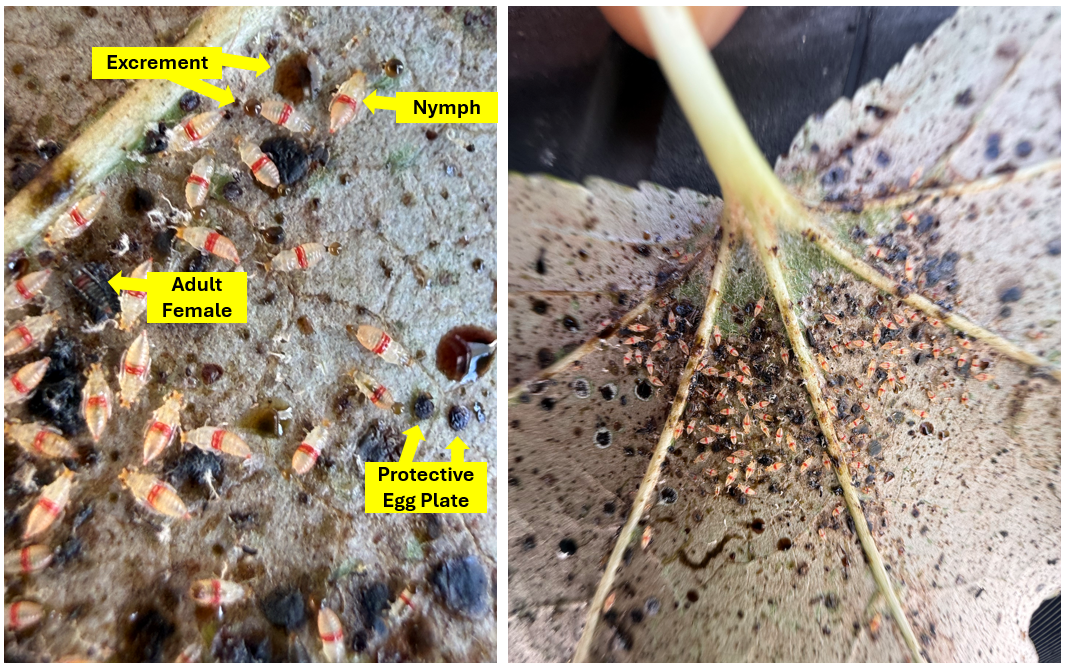
At a property in the Hitchcock West area of Hitchcock, all pine trees on site were identified as requiring bark beetle management. The scope includes all pines and the surrounding soils and grasses, and the treatment was designated as mandatory due to the risk of rapid decline and spread within a pine population.
Evaluation Findings:
Assessment supported elevated risk consistent with pine bark beetle pressure affecting the pine group. Pine bark beetle activity can escalate quickly, and untreated trees can become additional sources of pressure, increasing the likelihood of continued losses across the property if comprehensive management is not implemented.
Intervention:
A mandatory pine bark beetle treatment was specified for all pine trees on the property, including surrounding soils and grasses. Systemic insecticides, specifically imidacloprid and permethrin, are to be sprayed on all above-ground and below-ground plant parts to suppress pine bark beetles damaging the trees. A surfactant is added to improve uptake by opening stomata in the cell walls, allowing insecticides to be fully integrated throughout the treated trees.
Outcome (Observable):
Following treatment, pine bark beetle pressure was brought under control and remaining pines stabilized. Subsequent monitoring documented improved canopy performance and reduced indicators consistent with ongoing pine bark beetle activity, supporting effective suppression and reduced spread risk across the property.
Case Study #9374: Palm Biostimulant Treatment - Harborwalk, Hitchcock
Property Context:
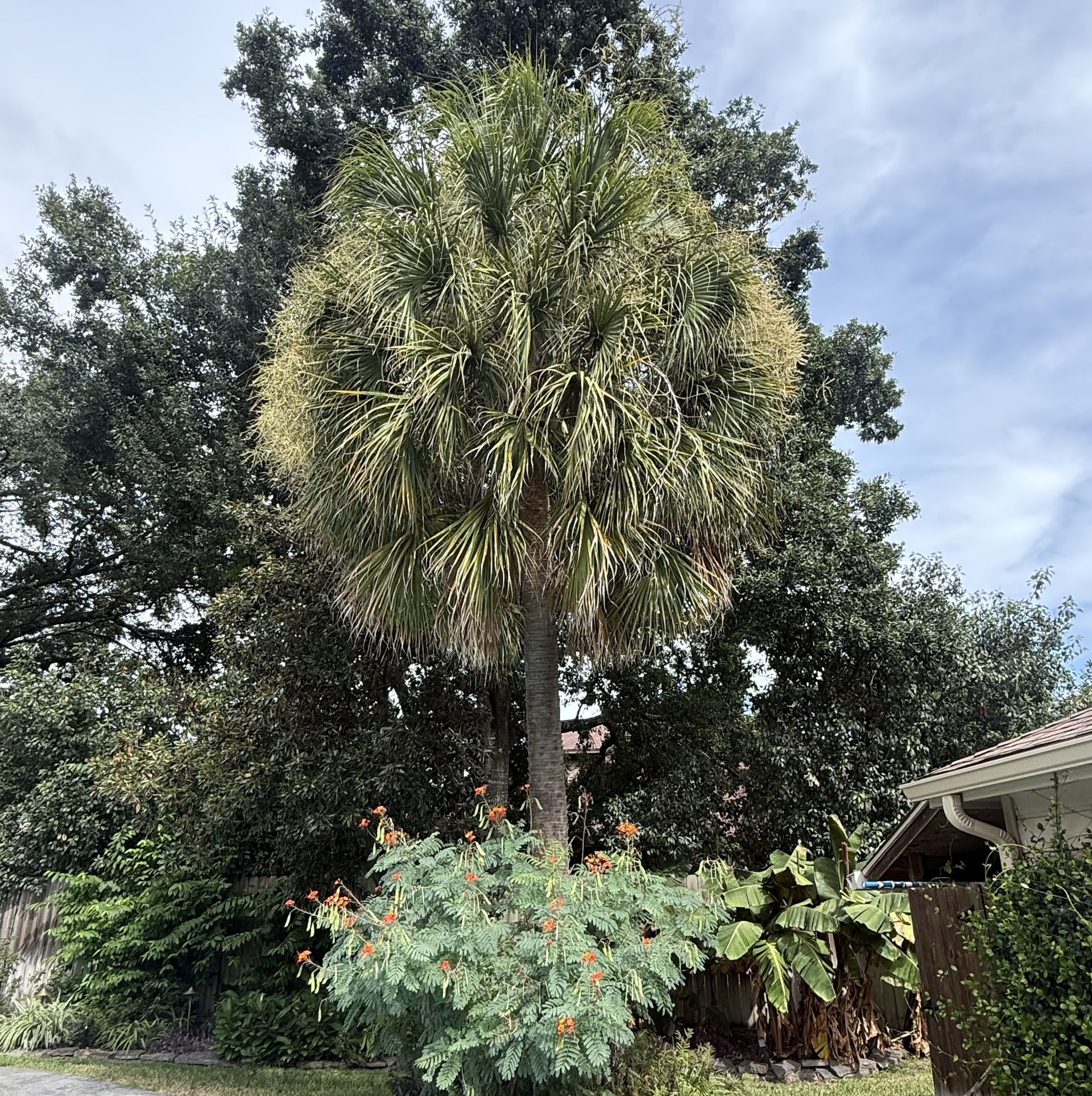
At a residence in the Harborwalk area of Hitchcock, a front yard palm was identified as needing supportive care to improve vitality and maintain stable performance. The recommended scope includes the palm and the surrounding soils and grasses to ensure effective root-zone coverage.
Evaluation Findings:
Assessment supported the need for proactive support focused on root-zone function and overall palm performance. Because the terminal bud is the single growing point in palms, treatment placement and coverage around the crown area was prioritized to support overall function and reduce stress during active growth periods.
Intervention:
An organic palm biostimulant treatment was recommended for the front yard palm, including surrounding soils and grasses for effective root-zone coverage. Per arborist instructions, the treatment is to be applied with heavy spray coverage around the terminal bud to ensure thorough contact in the crown region while also supporting below-ground function through the treated root zone.
Outcome (Observable):
Following treatment, the palm stabilized and showed improved vigor. Subsequent monitoring documented improved overall appearance and growth response consistent with successful biostimulant support and effective coverage around the terminal bud and root zone.
Communities We Serve in Hichcock
Eric Putnam BCMA Inc. provides arborist-led tree care, Plant Health Care, and professional tree evaluations throughout Hitchcock. Our Hitchcock service area includes properties in communities such as:
- Fountainbleau
- Garden Terrace
- Harborwalk
- Hitchcock West
- Mainland
- Oak Ridge
- Pecan Wood Estates
- Shady Woods
- Sunrise Creek
- Sunnyside
* If your neighborhood is not listed, contact our office to confirm service availability for your property *
Nearby Cities We Serve
Eric Putnam BCMA Inc. also provides professional tree care and arborist services in communities near Hitchcock. Select a city below to learn more about our services in that area.

Request an Arborist Evaluation in Hitchcock, TX
If you have questions regarding canopy stability, structural defects, or long-term tree health in Hitchcock, request an evaluation with a certified arborist. Recommendations are based on documented findings and site-specific conditions.
Book an Appointment
Get a quote
Contact Us
Liriope’s Muse - Expert Tree Care Tips