


Arborist Services in Porter, TX
Tree Risk Assessment and Structural Stability Planning in Porter, Texas
Porter, TX includes established residential corridors, newer commercial growth, and expanding development in East Montgomery County. Tree management in Porter frequently involves evaluating structural reliability within a landscape shaped by growth along FM 1314 and the Grand Parkway corridor, where canopy is increasingly asked to coexist with homes, drives, road frontage, and newer infrastructure. TxDOT describes FM 1314 in this area as a corridor experiencing increased traffic due to residential and commercial development.
Areas around FM 1314, SH 99, and Porter Community Park reflect that pattern clearly. Montgomery County public notices reference a Porter Community Park project, and county purchasing records identify Porter Park site improvements in Precinct 4. At the same time, TxDOT toll system materials show direct SH 99 access at FM 1314 and Valley Ranch, confirming how important the Porter growth corridor has become.
Because Porter is developing rapidly rather than aging in place as a static neighborhood, arborist evaluation often has to account for how site conditions are changing around the tree. Some trees are growing in more constrained residential settings, while others remain on sites transitioning from open ground to built frontage. Structural reliability, canopy balance, and root-zone performance all need to be judged in that context rather than by canopy appearance alone.
We provide arborist-led services in Porter focused on documented structural assessment, preservation-first planning, and long-term tree health stability.
Local Tree and Property Conditions in Porter, TX
Porter’s local conditions are influenced by both development pressure and county-level floodplain regulation. Montgomery County Floodplain Administration states that its regulations are intended to reduce losses from flood conditions, protect public facilities and utilities, and guide sound development in flood-prone areas. In practical terms, that means tree performance in Porter may be affected by drainage behavior, floodplain constraints, fill activity, and runoff concentration even when visible canopy symptoms appear gradually.
Development activity is also an important part of the local tree picture. Montgomery County permitting materials note that new floodplain regulations went into effect in late 2025 and that drainage sign-off is required for certain disturbed areas and development activity. That is relevant to tree care because grading, clearing, drainage modification, and expanding hardscape can change how root systems function over time, especially in communities where infrastructure is still catching up with growth.
Trees in Porter may also occupy very different property types within a short distance. Some are near road corridors, schools, and commercial uses along FM 1314. Others are closer to park or residential settings where canopy has more room to spread laterally. As those trees mature, structural attachment points, branch weight distribution, and root support may require periodic evaluation relative to surrounding structures and access routes.
Evaluation Philosophy in Porter
Professional arborist evaluation in Porter must account for canopy structure, root-zone performance, attachment integrity, and proximity to likely targets such as homes, garages, driveways, roads, and public-use spaces.
Assessment frequently focuses on:
- Structural stability within maturing residential and roadside canopy
- Root performance where drainage changes, compaction, or floodplain conditions may influence stability
- Early identification of structural defect progression
- Canopy distribution relative to homes, access routes, and surrounding infrastructure
A tree that appears full or healthy from a distance may still contain structural concerns that require mitigation. Recommendations are based on documented findings and observed site conditions rather than canopy appearance alone.
Priority Services in Porter, TX
Tree Risk Assessment:
Risk assessment in Porter often addresses canopy extending over homes, driveways, neighborhood streets, and developing corridor frontage. Structural inspection evaluates attachment integrity, defect formation, and weight distribution across major limbs.
Where mitigation remains feasible, corrective pruning or structural reduction may be recommended based on documented findings.
Plant Health Care and Root-Zone Management:
Root-zone evaluation may be indicated when vitality decline appears associated with soil compaction, drainage variability, or disturbance from nearby development activity. Plant Health Care programs focus on improving long-term root performance and overall tree resilience when site conditions warrant intervention.
Structural Pruning:
Structural pruning is objective-based and applied when documented imbalance, defect progression, or canopy interference with nearby structures is identified. Broad canopy thinning is not recommended as a routine preventive practice. Recommendations prioritize maintaining structural stability while preserving canopy health.
Removal Planning and Tree Disposition Guidance:
Removal is recommended only when structural reliability cannot be reasonably mitigated or when defect progression creates unacceptable risk relative to nearby targets. Planning includes evaluation of property access, surrounding infrastructure, and protection of adjacent landscape elements during removal operations.
Environmental Considerations in Porter
Porter’s growth corridor conditions make drainage and floodplain awareness especially important. Montgomery County continues to maintain active floodplain administration and development review, while TxDOT documents ongoing access and improvement work along FM 1314 and nearby transportation corridors. Together, those factors mean tree stability in Porter may be influenced as much by changing site conditions as by the age or size of the canopy itself.
As canopy matures across East Montgomery County, periodic structural evaluation helps identify developing concerns before they become urgent. Preservation-first management remains the priority when mitigation remains feasible.
Recent Work in Porter, TX
Case Study #11070: Scale Treatment - Riverwalk, Porter
Property Context:
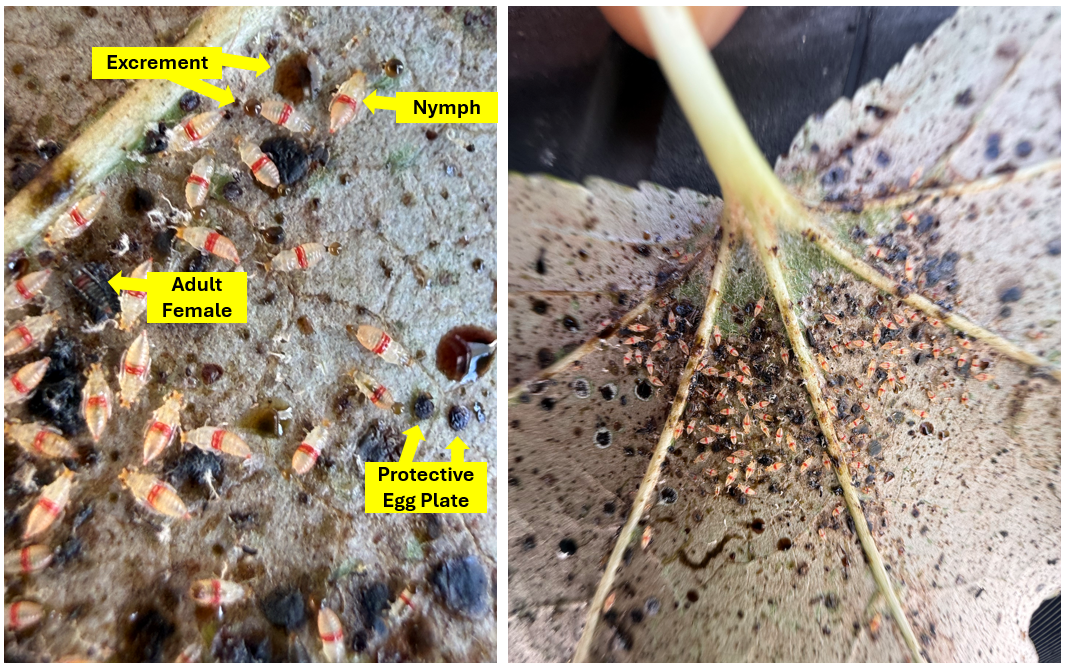
At a residence in the Riverwalk area of Porter, blueberry plants across the entire yard were showing decline and performance issues consistent with sap-feeding insect pressure. The treatment scope included all blueberry plants and the surrounding soils and grasses to support effective coverage.
Evaluation Findings:
Assessment documented indicators consistent with scale, whiteflies, and mealybugs affecting the blueberry planting. Findings supported active sap-feeding pressure contributing to reduced vigor and canopy stress, with increased risk for continued decline if pest activity was not suppressed.
Intervention:
A targeted scale, whitefly, and mealybug treatment was performed for all blueberry plants across the entire yard, including the surrounding soils and grasses in accordance with arborist instructions. Management focused on suppressing pest activity, reducing ongoing stress, and supporting recovery through condition-based plant health care applied across the treatment area.
Outcome (Observable):
Following treatment, pest pressure was brought under control and plant condition stabilized. Subsequent monitoring documented improved foliage condition and renewed growth response consistent with successful suppression and recovery support.
Communities We Serve in Porter
Eric Putnam BCMA Inc. provides arborist-led tree care, Plant Health Care, and professional tree evaluations throughout Porter. Our Porter service area includes properties in communities such as:
- Azalea District
- Brooklyn Trails
- Forest Colony
- Maple Heights
- Northpark Woods
- Riverwalk
- Royal Brook at Kingwood
- The Highlands
- Valley Ranch
- Woodridge Forest
* If your neighborhood is not listed, contact our office to confirm service availability for your property *
Nearby Cities We Serve
Eric Putnam BCMA Inc. also provides professional tree care and arborist services in communities near Porter. Select a city below to learn more about our services in that area.

Request an Arborist Evaluation in Porter, TX
If you have questions regarding canopy stability, structural defects, or long-term tree health in Porter, request an evaluation with a certified arborist. Recommendations are based on documented findings and site-specific conditions.
Book an Appointment
Get a quote
Contact Us
Liriope’s Muse - Expert Tree Care Tips