

Liriope’s Muse: Tree Care Tips from a Master Arborist
TRUSTED TREE CARE SERVICES SINCE 1970
Liriope's Muse - Understanding Black Sooty Mold: What It Is and What It Means for Your Trees
If you’ve ever noticed a dark, powdery coating on the leaves of your trees, shrubs, or even the plants and patio furniture beneath them, you’re likely seeing black sooty mold. Despite its alarming appearance, this isn’t a disease attacking your plant directly, rather it’s a fungus that grows on the sticky residue, called honeydew, left behind by sap-sucking insects. (more on honeydew secretions in this blog)
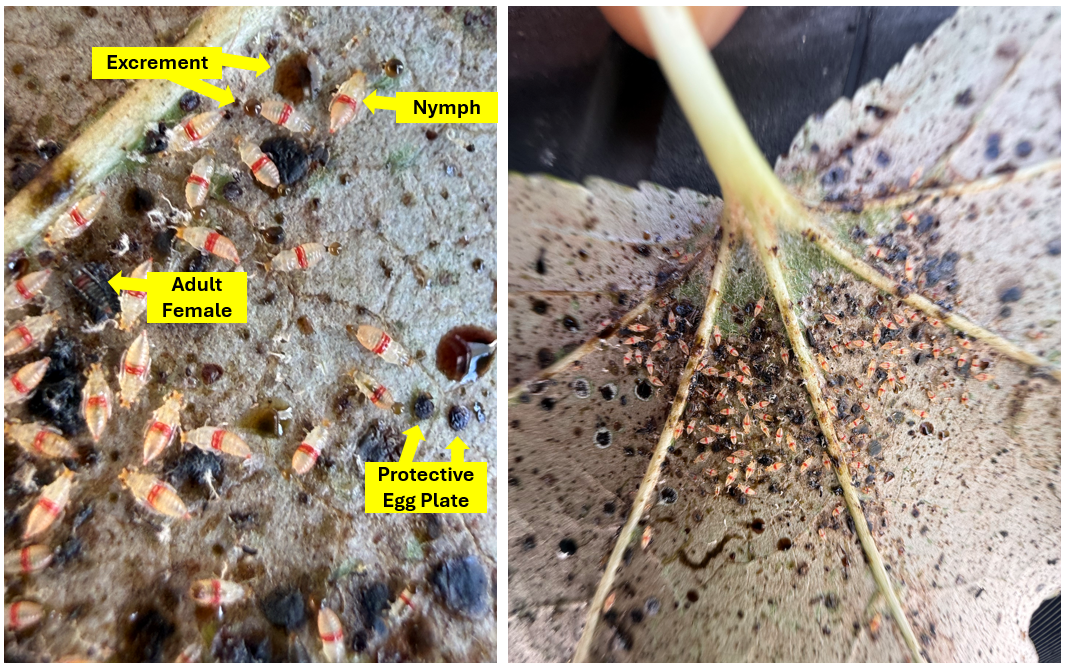
These insects – such as aphids, scale, mealybugs, whiteflies, or psyllids – feed on plant sap and excrete the excess sugars as honeydew. Once that sugary coating settles on leaves or bark, airborne fungal spores land and start growing on it, forming that dark, soot-like layer. The mold itself doesn’t invade the plant tissue; it’s simply living on top of the honeydew.
Even though the fungus isn’t parasitic, the problem shouldn’t be ignored. A thick layer of sooty mold can block sunlight from reaching leaf surfaces, limiting the plant’s ability to photosynthesize. Over time, that can lead to stunted growth, reduced vigor, and early leaf drop. In addition, the presence of sooty mold is a sure sign of an underlying insect infestation, and those insects do harm plants by feeding on their sap, weakening their structure and inviting further stress or disease. (more on a sap-sucking insect, and it’s effects in this blog)
Sooty mold also affects the aesthetics of the landscape. Homeowners and HOAs often call about trees that appear to be “covered in soot” or “turning black,” especially during warm, humid months. The sticky residue and subsequent black coating can drip onto driveways, cars, patio furniture, or decks, creating a frustrating mess that keeps coming back until the insect source is addressed.
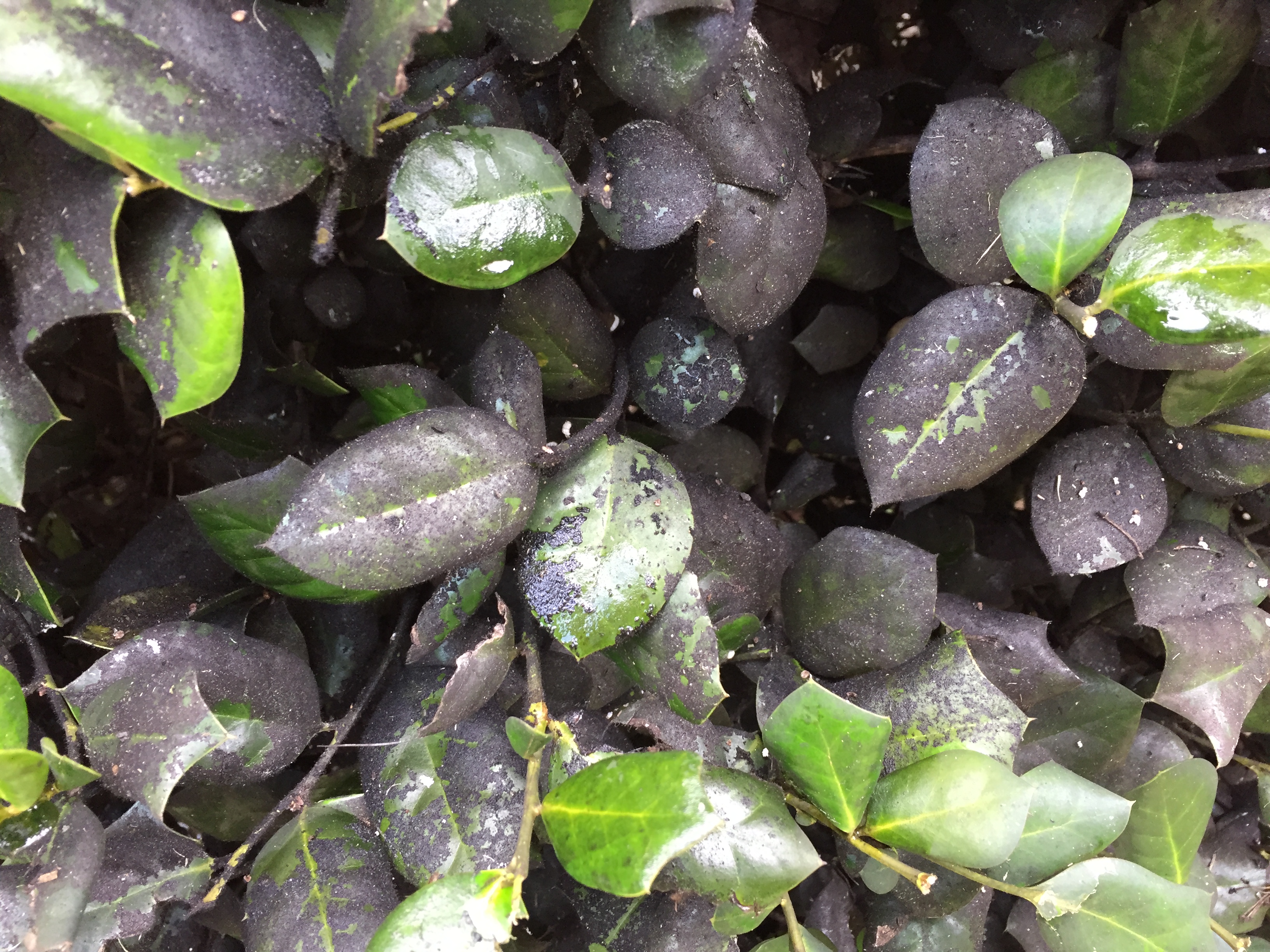
Pictured above, Black Sooty Mold on a Holly
How to Identify Sooty Mold
You’ll typically see a black, powdery or crusty layer on leaves, stems, and sometimes fruit. It can look like ash or charcoal dust. If you run a finger across it, some may wipe off. You might also notice a sticky or glossy film underneath – that’s the honeydew. Check closely for insects on the underside of leaves or along stems. Scale insects often appear as small bumps on twigs, while aphids and mealybugs cluster around new growth.
That said, upon inspection if you happen to find a pest infestation it is crucial that you reach out to a qualified and certified arborist immediately! Sap-sucking insects not only drain the life of the tree and bring sooty mold, but they may also be vectors for more serious pathogens that could surely kill your tree!
Managing and Preventing Sooty Mold
The first and most important step in controlling sooty mold is eliminating the insects that produce the honeydew. Treating the mold itself won’t solve the problem, it will simply return as long as honeydew is present.
For DIY control on smaller plants or shrubs, insecticidal soaps, horticultural oils, or neem oil can help control populations of aphids, scale, and whiteflies. Always follow product labels and avoid spraying oils or soaps in full sun or during very hot weather, since that can cause leaf burn. But for larger trees or persistent infestations, systemic treatments applied by a licensed arborist are often the most effective solution, since they reach insects that are protected under bark, in dense foliage, or those protected with a waxy coating.
Once the insect problem is under control, you can clean off the mold to restore the plant’s appearance and improve photosynthesis. For small plants, rinse leaves gently with water or wipe them using a soft cloth dipped in a mild soap solution. For larger trees, a light rinse with a garden hose can remove some buildup over time. The key is patience and gentle care! Avoid strong detergents or high-pressure washing, which can damage leaf surfaces.
Long-Term Prevention
To prevent sooty mold from returning, focus on maintaining overall plant health. Proper irrigation, balanced fertilization, and good plant care keep the plants in good health, making them less inviting to sap-sucking pests. Regular monitoring is also essential, as catching early signs of insects can prevent honeydew buildup before it leads to mold. Avoid over-fertilizing with nitrogen, as lush new growth often attracts aphids and other pests.
It’s also worth checking for infestations in overstory trees, since honeydew can drip down from infested branches onto healthy plants below. Many homeowners mistakenly treat the understory plants when the true culprit is high up in a nearby canopy.
What Not to Do
Fungicides are not necessary and are ineffective against sooty mold, since the fungus isn’t attacking the plant directly. Using a fungicide would cause more harm than good as it would remove all the beneficial fungi from the trees microbiome, while still leaving the black sooty mold behind. This would leave the tree open to more harmful fungul pathogens, and the destroyed microbiome will stress out the tree leading it to be further susceptible to the pests causing the sooty mold in the first place.
Instead, your goal should be to remove its food source – the honeydew. Once the insects are gone and the honeydew dries up, the mold naturally stops spreading and will eventually flake off or wash away.
Why It Matters
Sooty mold might seem like a cosmetic problem, but it’s a useful diagnostic clue. It tells you that insects are active and that your trees may be under stress. Left unchecked, these pests can cause long-term harm, particularly in young or already stressed plants. By understanding what sooty mold really means, and addressing the root cause, you can restore your trees’ health and appearance while preventing larger issues down the road.
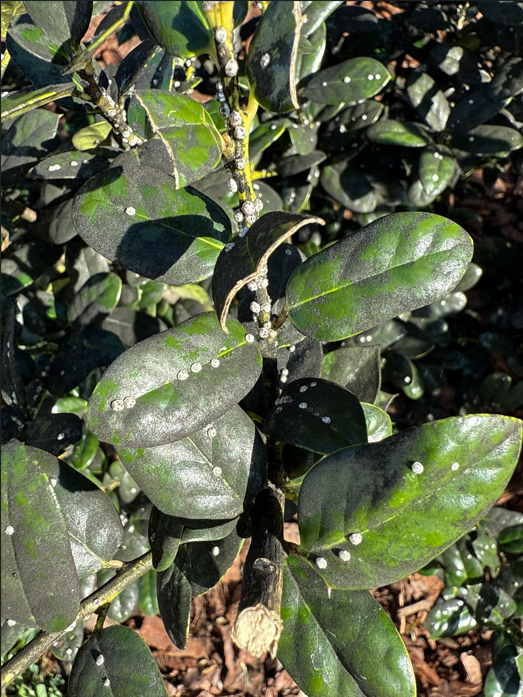
pictured above are scale insects on a Buford Holly, and the Black Sooty they left behind!
Resources I found useful during my research
- North Carolina State University Cooperative Extension: Sooty Molds
- University of California Integrated Pest Management (IPM): Sooty Mold Pest Notes
- Royal Horticultural Society (RHS): Sooty Moulds
- University of Hawaii Cooperative Extension: FAQ: Sooty Mold
Liriope’s Muse - Expert Tree Care Tips