Check Out Our Frequently Asked Questions!
What is Arboriculture?
Arboriculture is the science and practice of caring for individual trees and small groups of trees in urban and residential settings. It focuses on understanding how trees grow, how they respond to stress, and how to manage them safely and sustainably throughout their lifespan. Arboriculture includes pruning, risk assessment, diagnosis, planting guidance, soil care, and long-term tree management. The goal of arboriculture is to support healthy, structurally sound trees that enhance safety, property value, and the overall landscape.
What is the ISA?
The International Society of Arboriculture, or ISA, is the leading professional organization dedicated to advancing the practice of arboriculture through research, education, and credentialing. The ISA sets industry expectations for ethical conduct, sound tree biology, and professional competency, ensuring that certified arborists follow science-based standards when evaluating and caring for trees. Working with an ISA-credentialed professional provides confidence that your trees are being managed according to the highest level of current arboricultural knowledge.
What is ISA best management practices?
ISA Best Management Practices, often called ISA BMPs, are the practical, research-based guidelines that support the proper application of arboricultural standards such as ANSI A300. BMPs translate the science of tree care into clear, usable procedures for pruning, risk assessment, Plant Health Care, tree support systems, and other core practices. They help ensure that arborists follow consistent, defensible methods that promote tree health, safety, and long-term performance. When your tree care follows ISA BMPs, you can trust that the work is being completed according to the highest level of modern professional practice.
What are the ANSI A300 Standards?
ANSI A300 standards are the nationally recognized guidelines for proper tree care in the United States. These standards outline the accepted best practices for pruning, tree support systems, soil management, risk assessment, and other essential aspects of arboriculture. Following ANSI A300 ensures that all work is performed safely, ethically, and in a way that supports long-term tree health. When your tree care is guided by A300 standards, you can trust that the recommendations and actions taken are based on proven, research-supported methods.
What makes a Board-Certified Master Arborist different from other tree services?
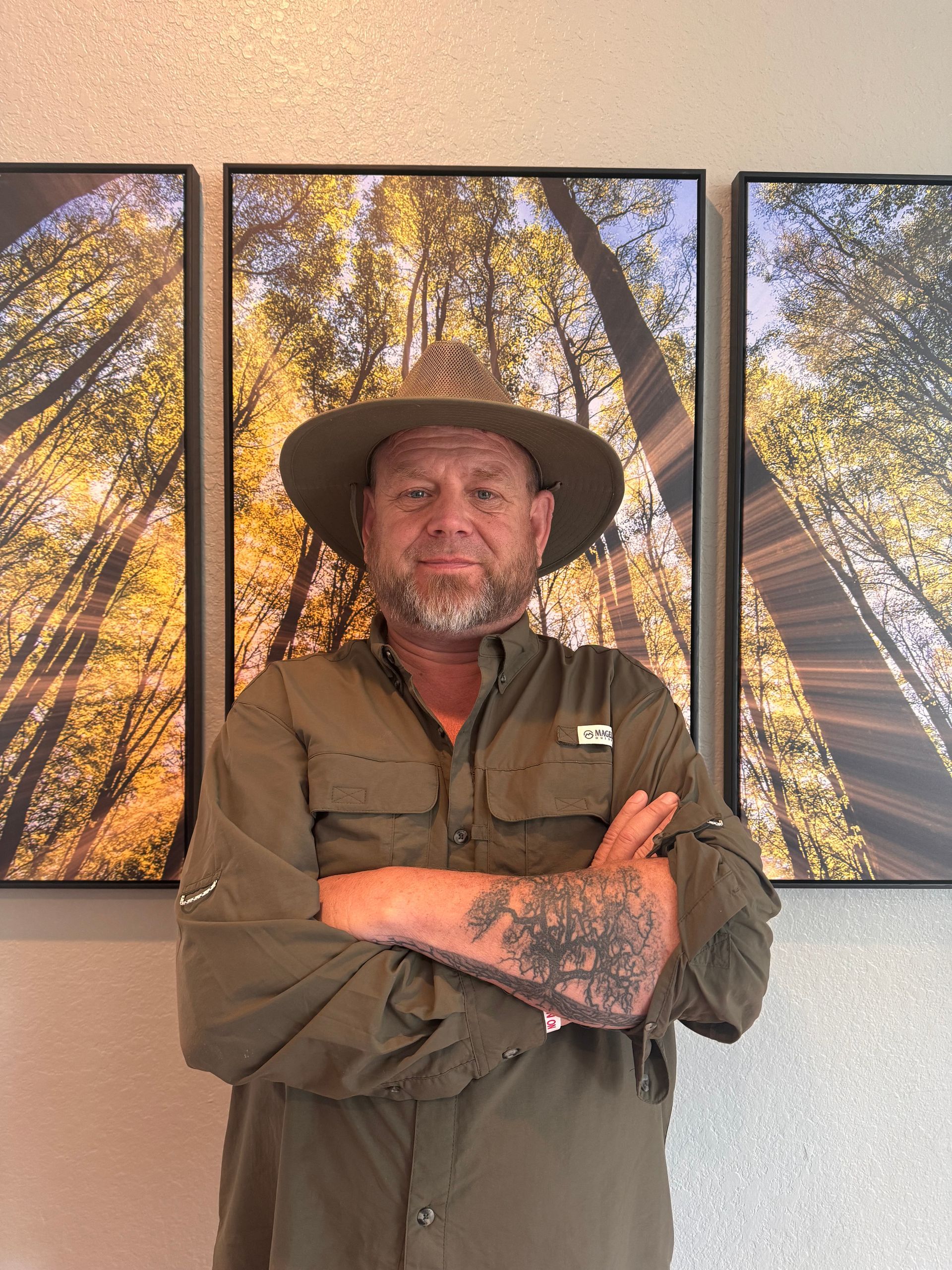
A Board-Certified Master Arborist holds the highest credential issued by the ISA, representing advanced knowledge in tree biology, diagnostics, risk assessment, and ethical practice. When you hire a BCMA-led team, you receive science-based guidance aligned with ANSI A300 standards rather than guesswork or production-driven recommendations. This ensures the care you receive prioritizes long-term tree health, safety, and responsible management.
How do you ensure your spray technicians are consistently trained and held to high professional standards?
Our Plant Health Care technicians complete one hour of structured training every day, five days a week, ensuring their skills remain current and precise. This daily program blends technical instruction, safety reinforcement, equipment practice, regulatory compliance review, and field-based mentoring, all aligned with ISA Best Management Practices and ANSI A300 standards. By maintaining this consistent training schedule, we ensure every technician who arrives on a property is thoroughly prepared to perform accurate, safe, and environmentally responsible applications.
How do you determine whether a tree is safe or poses a risk?
Tree safety is evaluated through a formal risk assessment that examines structural integrity, root stability, site conditions, and the likelihood and consequences of failure. By analyzing defects, load factors, and targets, we provide a clear understanding of the risk level and outline appropriate mitigation options. Our goal is to help you make informed and defensible decisions based on accurate information rather than assumptions.
What is Plant Health Care (PHC), and how does it benefit my trees?
Plant Health Care is a proactive, diagnostic-driven approach that supports tree vitality through proper soil conditions, irrigation, nutrient balance, and early identification of pests or diseases. Instead of reacting to decline after it becomes severe, PHC aims to reduce stress and build long-term resilience. This approach leads to healthier, safer, and more structurally sound trees throughout the life of the landscape.
Do I need to be home for the consultation?
You do not need to be home, but it is ideal because it allows us to walk the property with you and discuss the tree’s history, your goals, and any recent changes that may be relevant. If you cannot be present, we can still complete the assessment and provide photos, notes, and clear recommendations afterward. Either way, you will receive a professional evaluation and actionable guidance.
Can you diagnose why my tree is declining?
Yes. Tree decline can result from soil issues, irrigation problems, pests, pathogens, construction impacts, nutrient deficiencies, or environmental stress, and diagnosis is a core part of our work as a BCMA-led service. We perform a systematic evaluation of the canopy, trunk, roots, and site conditions to determine the underlying causes. Once identified, we recommend solutions tailored to restore health whenever possible.
Do you provide written reports for insurance, construction, or legal cases?
We provide formal arborist reports, risk assessments, construction impact reviews, forensic evaluations, and expert witness support when needed. All documentation follows ISA Best Management Practices and is written clearly and professionally so it can be understood by insurance companies, attorneys, municipalities, and property owners. Our reports are objective, defensible, and aligned with industry standards.
What happens after the consultation, do you help me understand my options?
Yes. After completing the assessment, we explain the findings in clear language and outline the most appropriate options, which may include pruning, PHC treatments, monitoring, soil improvements, or removal if necessary. Our role is to help you understand the reasoning behind each recommendation so you can make confident decisions based on your goals, budget, and desired level of risk reduction.
What should I expect during an arborist consultation?
During a consultation, we conduct a thorough evaluation of your tree or trees, discuss your goals and concerns, and explain our findings in clear and practical terms. You can expect straightforward recommendations that outline what is happening, why it matters, and what steps are appropriate moving forward. Our aim is to give you clarity, confidence, and a strong understanding of your options.
When is tree removal necessary?
Removal is recommended only when there are no safe or practical alternatives such as pruning, cabling, or Plant Health Care. It becomes necessary when structural failure is advanced, roots are severely compromised, disease or decline is irreversible, or when the tree poses an unacceptable risk to people or property. While we prioritize preservation, safety is always the guiding factor in determining whether removal is appropriate.
What does proper pruning actually accomplish?
Proper pruning improves a tree’s structure, health, and long-term safety by removing defective or dying branches and guiding the tree’s natural architecture. When done according to ANSI A300 standards, pruning supports stronger branch attachments, reduces the likelihood of future failures, and helps the tree allocate energy more efficiently. Proper pruning preserves both the form and function of the tree while minimizing stress and promoting long-term stability and resilience.
How do I know if I need an arborist consultation?
You should schedule a consultation if you’ve noticed changes in your tree, such as leaf drop, canopy thinning, cracks, leaning, fungi at the base, or increased deadwood.
A consultation is also valuable if you’re planning construction, buying a home, managing storm damage, or simply want a professional evaluation for safety and long-term health.
Many clients schedule annual checkups like a wellness visit to catch issues before they become costly.
What types of trees do you work with?
We work with all species common to our region, including shade trees, ornamentals, palms, fruit trees, and heritage specimens. Every assessment considers the species’ natural growth patterns, structural tendencies, and environmental needs. Whether your tree is newly planted or decades old, our recommendations are tailored to support its unique biology and long-term performance.
What signs should I look for that indicate a tree might be struggling?
Common warning signs include thinning canopy, premature leaf drop, dead branches, fungal growth at the base, cracks in the trunk, leaning, soil movement, and increased insect activity. These symptoms often point to underlying stress or structural issues that should be evaluated promptly. Early diagnosis allows for more effective treatment and reduces the likelihood of future failures.
Can you help me decide which trees to keep, remove, or plant on my property?
We provide long-term site planning that considers species suitability, soil conditions, irrigation, structural integrity, and your goals for aesthetics, shade, safety, and property value. We help you identify which trees are worth investing in, which may cause future problems, and which species will thrive in your landscape. This guidance allows you to make informed choices that benefit your property for years to come.
How often should my trees be inspected by an arborist?
Most trees benefit from an inspection once a year, especially mature or high-value trees located near structures or high-use areas. More frequent inspections may be needed if the tree is showing signs of decline or if storms or changes to the site have occurred. Regular evaluations help identify issues early and support both safety and long-term health.
Can you help with tree selection and planting recommendations?
Yes. Proper species selection is essential for long-term success, and we can recommend trees based on soil type, space, irrigation, and your landscape goals. Choosing the right tree for the right location reduces future maintenance needs and supports stronger structural development. A well-planned planting decision enhances the health and beauty of your property for decades.